What to Know Before You Decide
Yes — privacy screens reduce wind, and some fabrics block it almost completely. How much wind passes through depends on the fabric openness factor: a 3–5% mesh fabric cuts wind significantly while allowing some airflow, while dense PVC or vinyl screens with 0–1% openness block wind much like a solid wall. The right choice depends on whether you want wind reduction, full blockage, or a balance between airflow and protection.
Wind comfort is one of the most common reasons homeowners in the GTA install retractable privacy screens on exposed decks, patios, and pergolas. Understanding how fabric selection affects airflow helps set expectations before the system is installed.
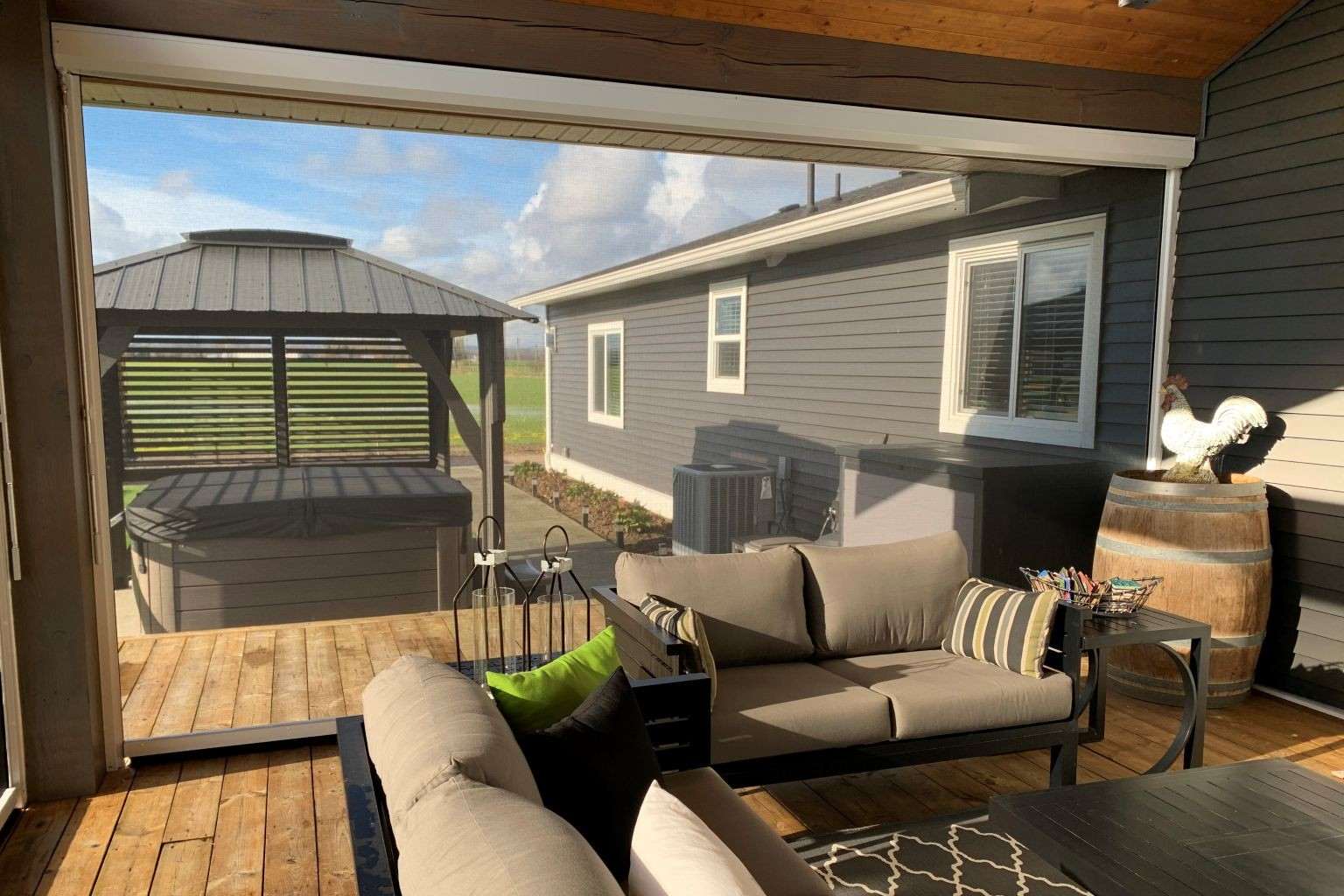
How fabric openness factor works
Openness factor (OF) is the percentage of the fabric surface that is open weave versus solid fibre. A fabric rated at 5% OF has 5% of its surface as open holes and 95% as solid material. That small open percentage has a significant effect on airflow — at 5% OF, a screen acts more like a windbreak than an open barrier.
The relationship is not linear. Moving from 10% OF to 5% OF roughly doubles wind resistance. Moving from 5% to 3% adds significantly more. A 0–1% OF fabric — dense PVC or clear vinyl — blocks nearly all airflow and acts like a solid panel for wind purposes.
Mesh fabrics: wind reduction with airflow
Solar screen mesh fabrics in the 3–5% openness range are the most common choice for residential privacy and wind screening. They reduce wind noticeably — enough to make an exposed patio or elevated deck comfortable on a breezy day — while still allowing enough airflow that the space does not feel sealed.
These fabrics also block a significant amount of UV and glare, which is why they are called solar screens rather than just privacy screens. Wind reduction, sun control, and privacy all happen simultaneously with the same panel.
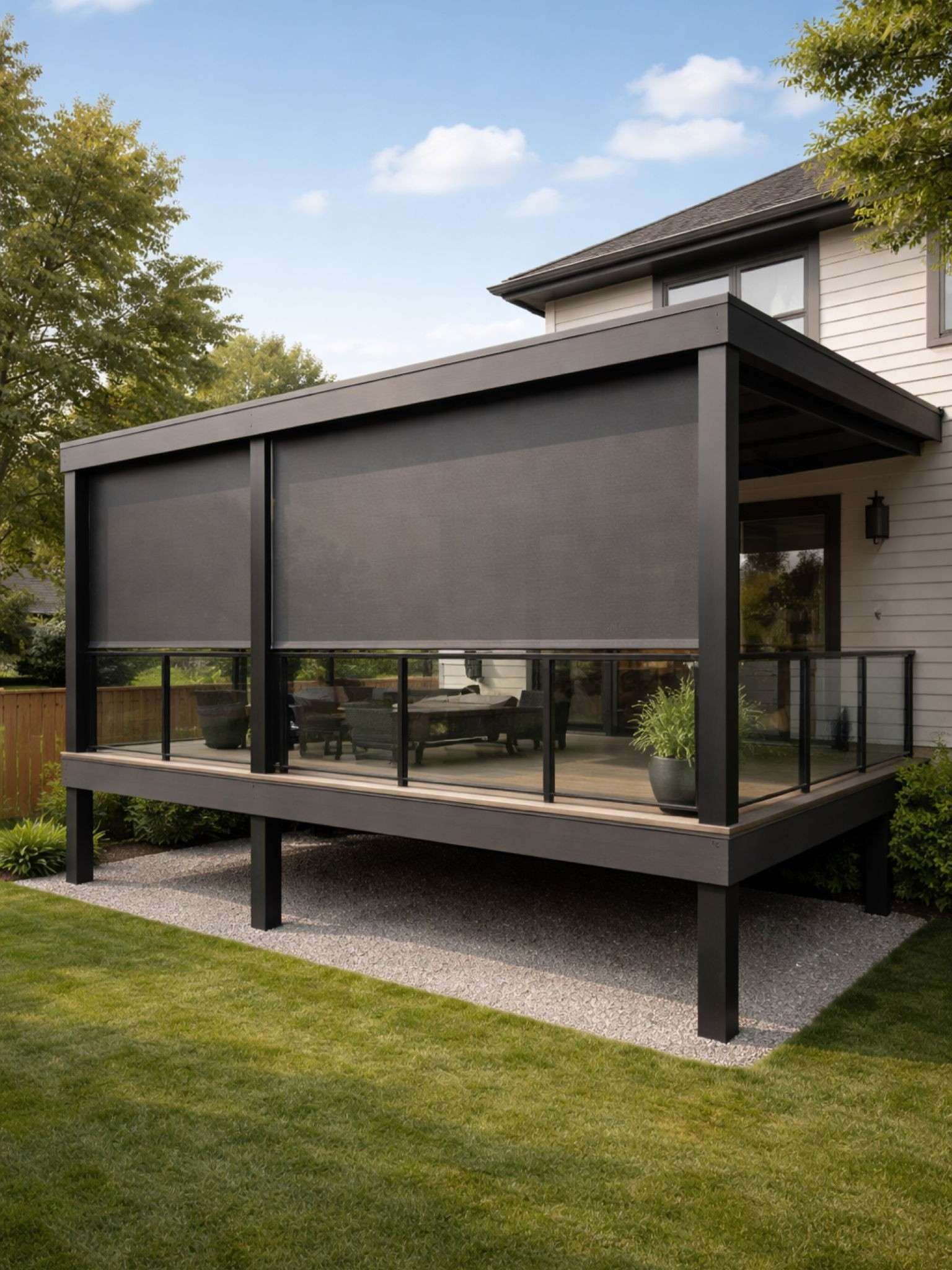
Dense PVC and vinyl screens: near-complete wind blockage
Woven PVC fabrics and clear vinyl panels at 0–2% openness stop almost all wind. These work best when the goal is a fully enclosed feel — an outdoor room, a screened porch in constant use, or an exposed balcony where wind is the primary comfort problem rather than privacy or sun.
The trade-off is heat buildup. A sealed fabric on a south- or west-facing wall on a hot afternoon can make the enclosed space feel warmer than an open mesh would. Ventilation becomes something to plan for when using near-solid fabrics.
When wind blocking matters most in the GTA
- Elevated decks that are exposed on multiple sides and catch prevailing westerly winds.
- Rooftop patios and condo terraces with no natural windbreak from adjacent buildings.
- Corner lots where wind reaches the patio from more than one direction.
- Pergolas and outdoor dining areas where candles, place settings, or lightweight furniture move in sustained wind.
- Spring and fall use — the GTA shoulder seasons have the strongest average winds and the best weather for outdoor use.
Combining screens for full perimeter wind control
A single screen on the primary wind-facing side reduces but does not eliminate wind at the patio level. Wind wraps around a single screen panel. For full perimeter control on a pergola or deck, two or three screens on adjacent sides are more effective than one dense screen on one face.
This is one reason motorized systems are worth considering for wind control applications — multiple screens need to move together quickly when conditions change.