What to Know Before You Decide
Privacy screens work well during the day because outside light is stronger than interior light — the fabric blocks the view from the brighter side. At night, when interior lights are on and exterior is dark, the dynamic reverses: a standard mesh screen that works perfectly by day can become translucent, silhouetting movement and activity inside. Denser fabrics — 3% openness or lower — significantly reduce this effect without eliminating airflow.
Understanding how privacy screens handle daytime versus nighttime light conditions helps buyers choose the right fabric for how the space is actually used — and for what time of day that privacy matters most.
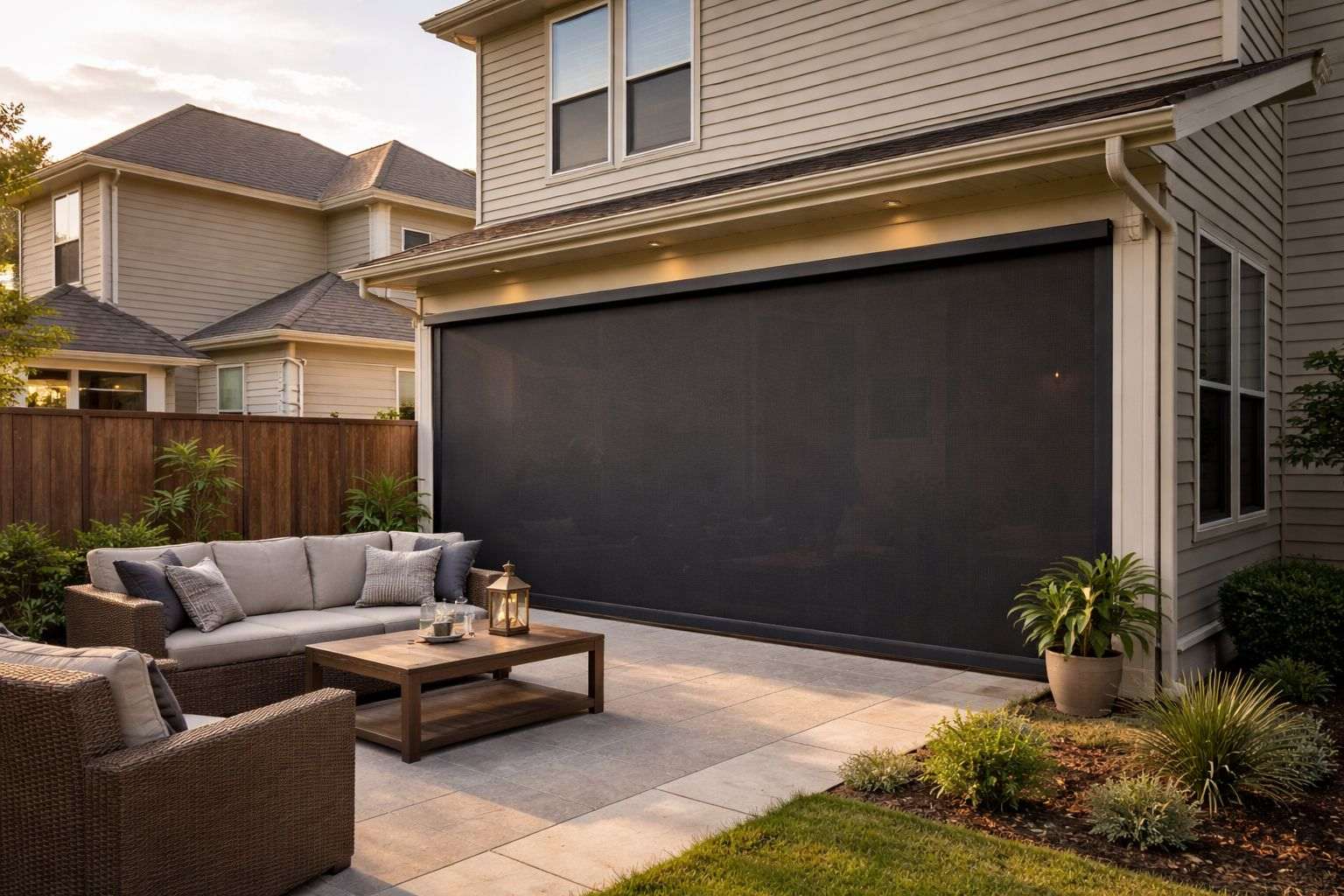
Why daytime privacy is easy for most fabrics
Outdoor mesh fabrics work through a light differential principle. The side with more light appears opaque from the darker side. During daylight hours, the exterior is almost always brighter than the interior, so looking from outside in through a deployed screen reveals very little. Even a relatively open 10% OF mesh blocks the view effectively during daytime.
This is why most patio privacy screens perform well during the hours they are most commonly used — late morning through early evening on a sunny or partly cloudy day.
The nighttime reversal problem
After dark, the light differential flips. Interior lighting — kitchen lights, living room lamps, dining fixtures — makes the inside brighter than the darkened exterior. From outside, the screen becomes translucent. Movement, silhouettes, and activity inside become partially visible through an open-weave mesh.
How visible depends entirely on fabric density. A 10% OF solar screen provides minimal privacy at night. A 3–5% OF dense mesh provides noticeably more. A 0–2% OF blackout-style or PVC fabric provides close to full privacy regardless of interior lighting.
Fabric density recommendations for nighttime privacy
- 10% OF and above: Good daytime privacy, poor nighttime privacy with interior lights on.
- 5–7% OF: Moderate nighttime privacy — silhouettes are less distinct but still somewhat visible.
- 3–5% OF: Good nighttime privacy — most movement is not clearly visible from outside.
- 1–3% OF (dense PVC or blackout mesh): Near-complete nighttime privacy, minimal airflow.
- Clear vinyl panels: Full visibility in both directions — not appropriate where nighttime privacy matters.
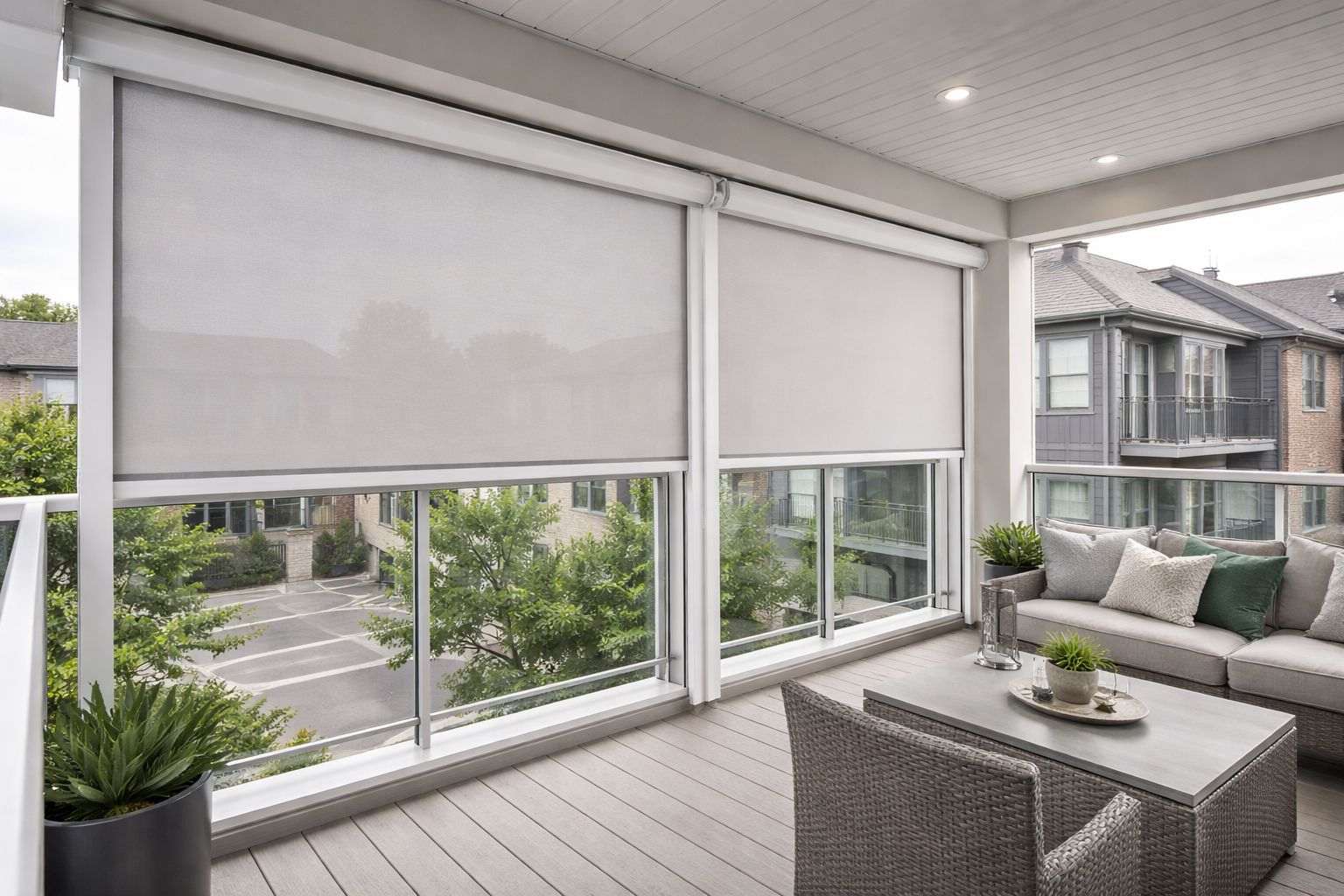
When to prioritize nighttime privacy
Nighttime privacy matters most for spaces used regularly in the evening — outdoor dining areas, covered porches, patio seating areas facing a street or close neighbour. For spaces used only during the day, standard solar mesh at 5–10% OF handles the primary use case without the added cost of a denser fabric.
If the space is used both day and evening, selecting a 3–5% OF dense mesh is usually the right balance — effective during the day, useful at night, and still allowing enough airflow to avoid heat buildup.
Exterior lighting as a complement to denser fabrics
Adding outdoor lighting — string lights, wall sconces, or landscape lighting — increases the exterior light level and reduces the nighttime privacy gap even with a standard mesh fabric. If the exterior is well-lit, the light differential advantage returns. This is a practical option for spaces where airflow matters more than a fabric upgrade.
That said, exterior lighting does not fully substitute for a denser fabric if the neighbour is standing in darkness looking toward a brightly lit interior. For spaces where true nighttime privacy matters, fabric density is the more reliable solution.