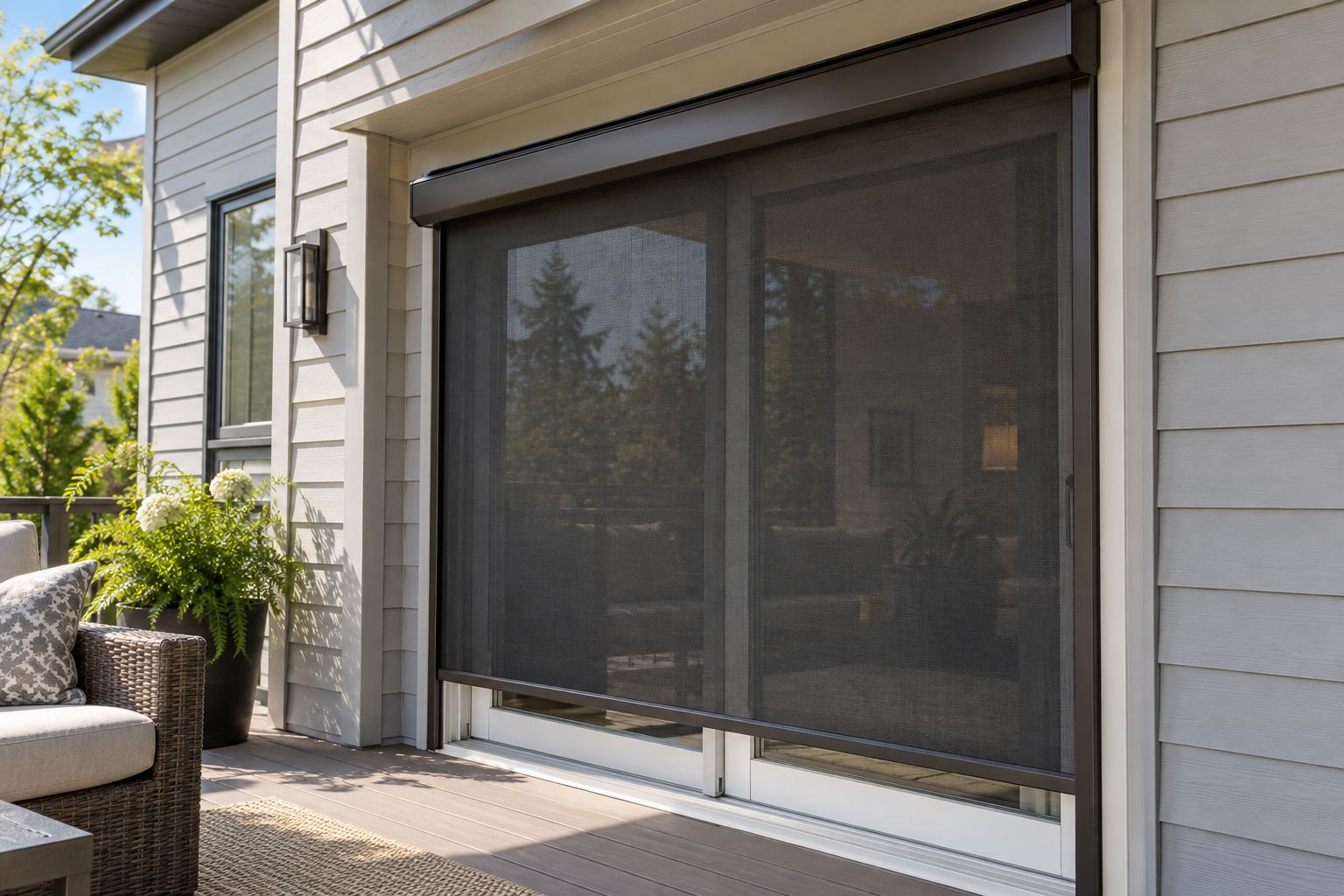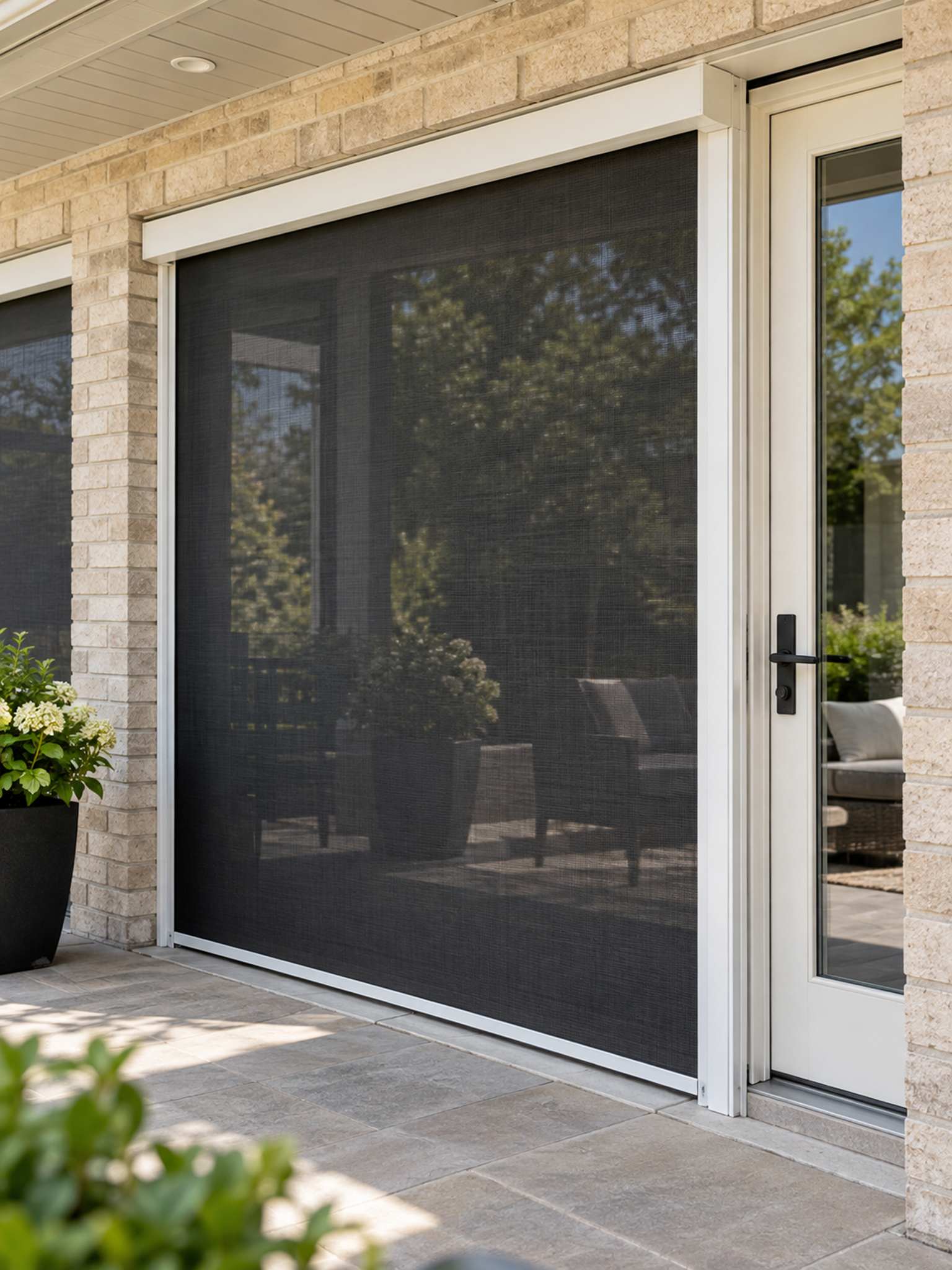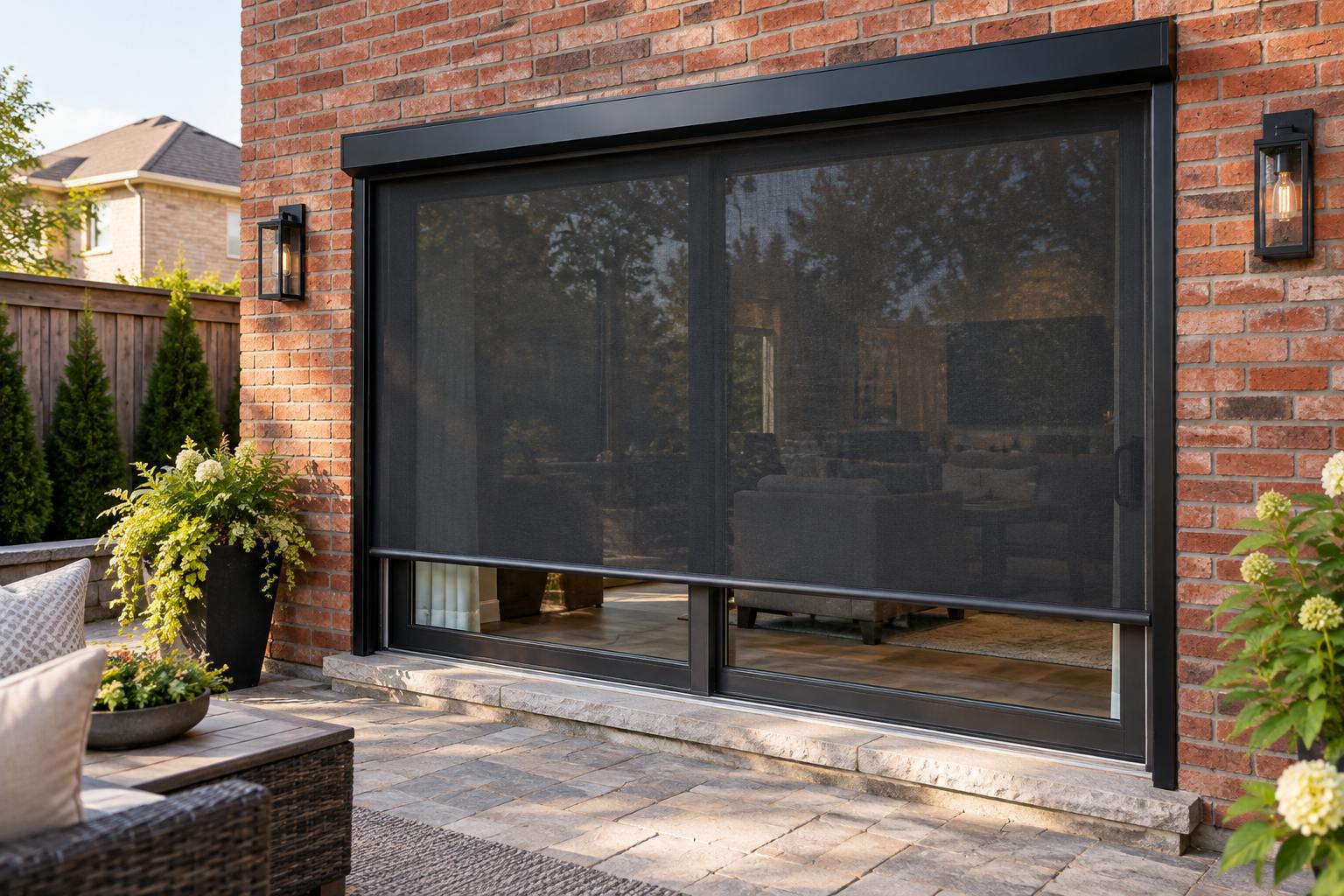
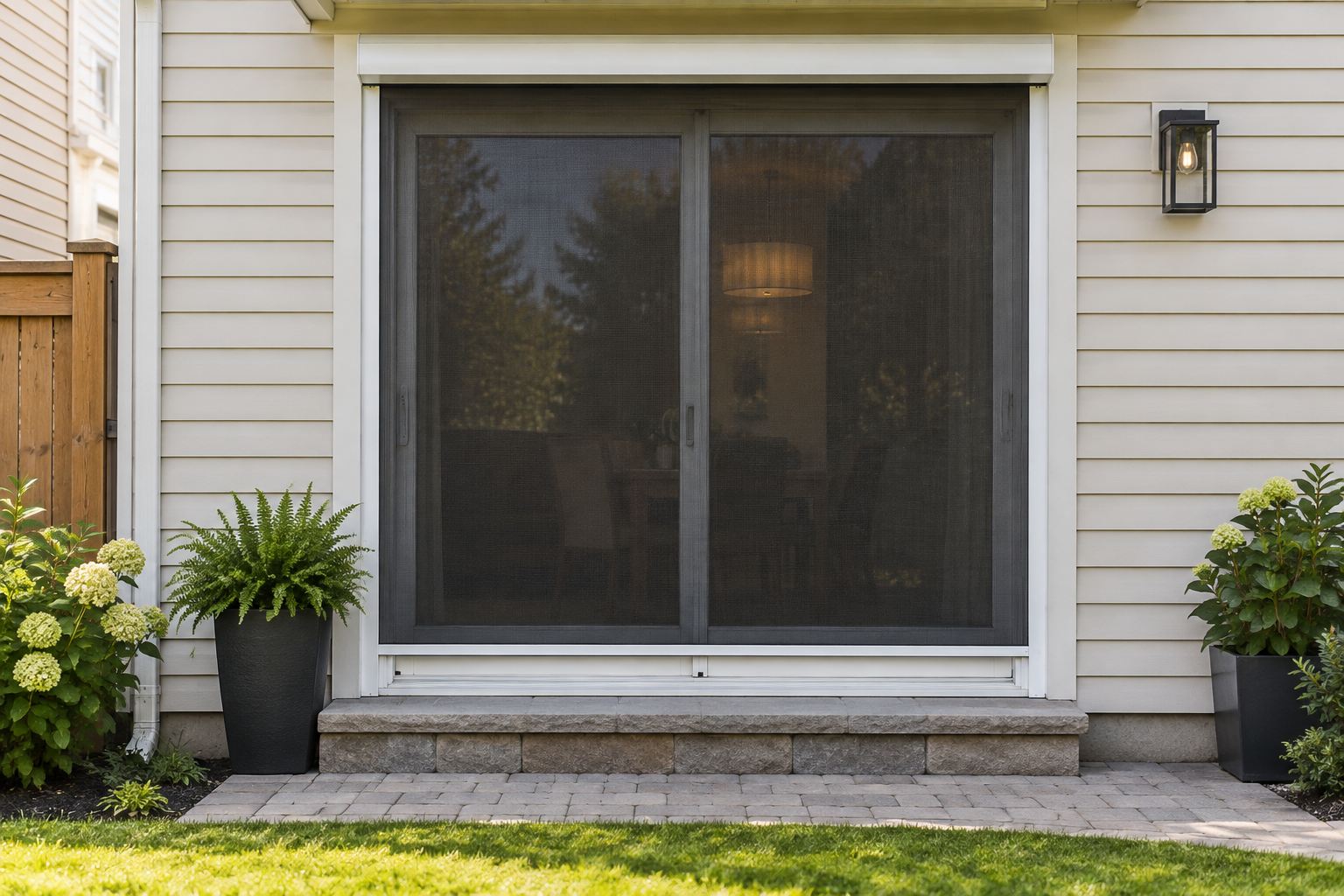
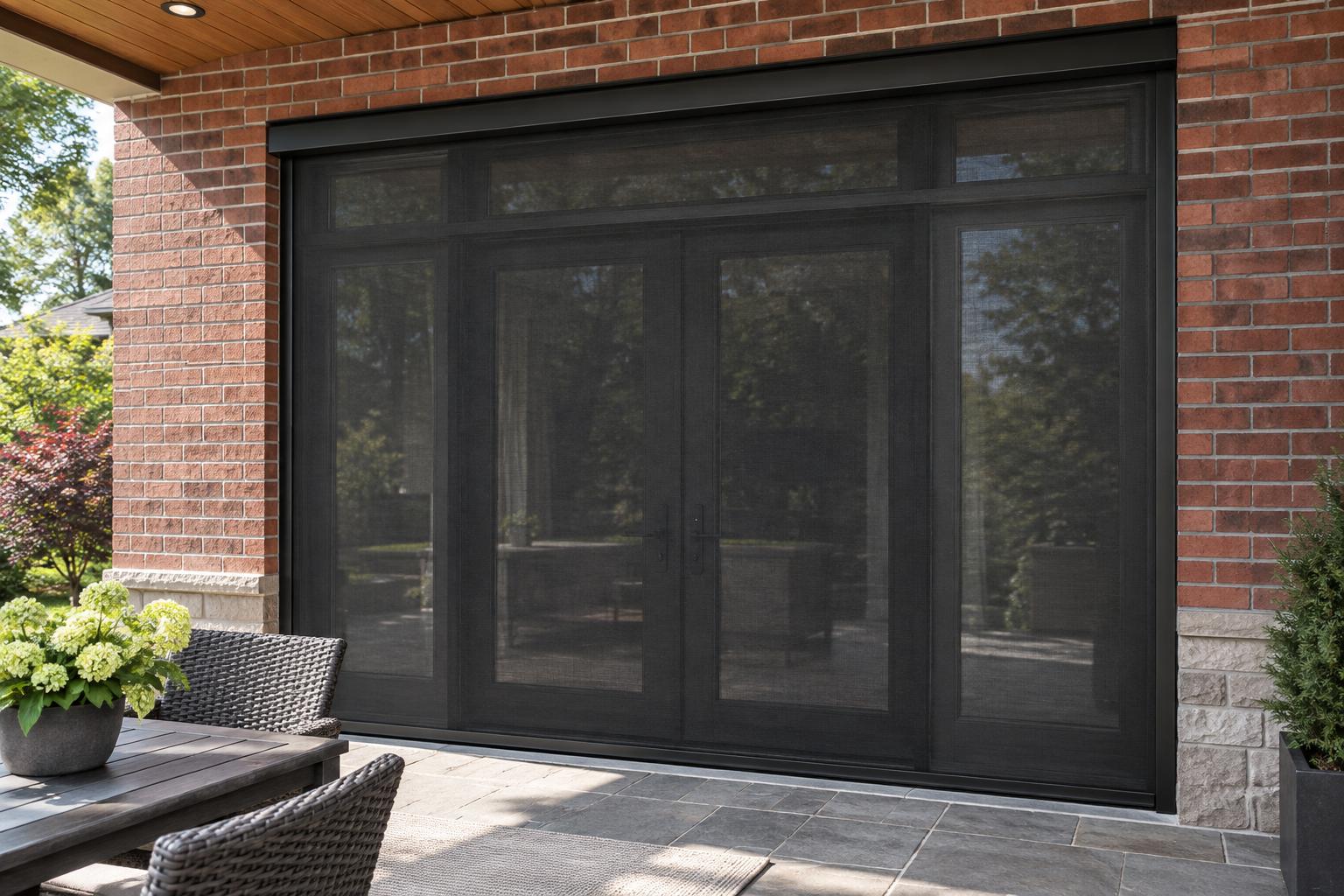
Exterior roll-up screen lowered over a sliding patio door

Patio Door Privacy Screens: Stop Heat and Sightlines at the Glass

Exterior roll-up screens for sliding and French patio doors - solar heat blocked before it enters, daytime privacy without darkening the room.

  • Heat Blocked Before the Glass
  • Daytime Privacy
  • Insect Barrier
  • Retractable When You Want
10-Year Manufacturer Warranty Somfy Motors Free On-Site Measure

At a Glance

A patio door privacy screen is an exterior roll-up fabric screen mounted outside a sliding or French door. Lowered, it stops solar heat before it reaches the glass and adds daytime privacy without heavy interior blinds. Every screen is custom-made, Somfy-motorized and professionally installed across Toronto and the GTA.

Updated

Manufacturer warranty, Somfy motor included
10 years
Installation workmanship warranty
1 year
Motorized as standard
Somfy
On-site measurement
Free

Why Homeowners Screen Patio Doors

  • Heat Control at a Major Glass Opening

    A patio door is often the single largest area of glass on the wall. Stopping solar gain outside the glass is far more effective than blocking light once it is already in the room.

  • Better Daytime Privacy Into Living Areas

    Patio doors usually open off the room the household actually lives in. A tighter openness fabric limits inward visibility from the yard while your view out stays usable.

  • Works With Sliding and French Doors

    The system mounts to the surrounding exterior surface rather than the door itself, so sliding, French, and multi-panel door sets are all workable openings.

  • Inside Control With Motorized Options

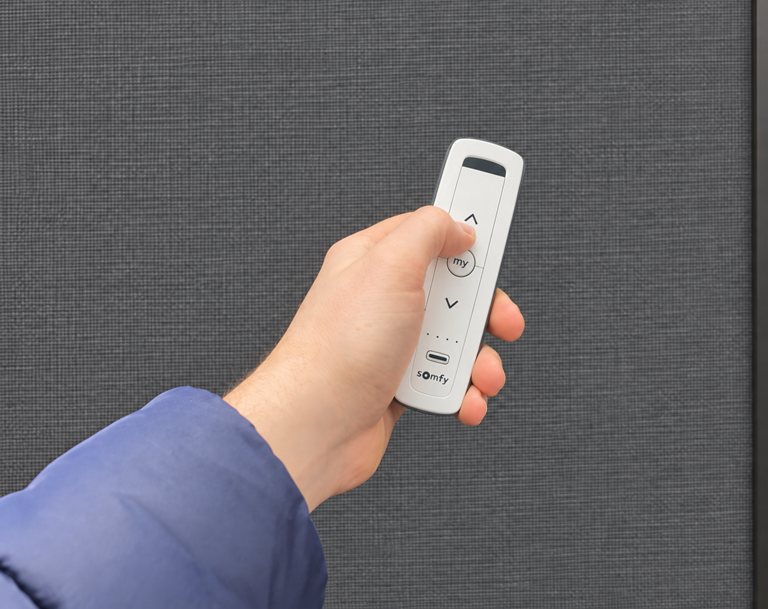
    A motorized screen is operated from inside the room with a Somfy radio remote or the TaHoma app with a compatible TaHoma hub - so nobody has to step out through the door to adjust the screen covering it.

Find Your Layout

Common Patio Door Configurations

Door type and opening width decide the layout. These four cover almost every door set we quote.

Book a Free Measure
  • Exterior privacy screen lowered across a standard two-panel sliding patio door Most Common

    Standard Sliding Door

    A single screen across a two-panel sliding door, typically 1.8 to 2.4 metres wide.

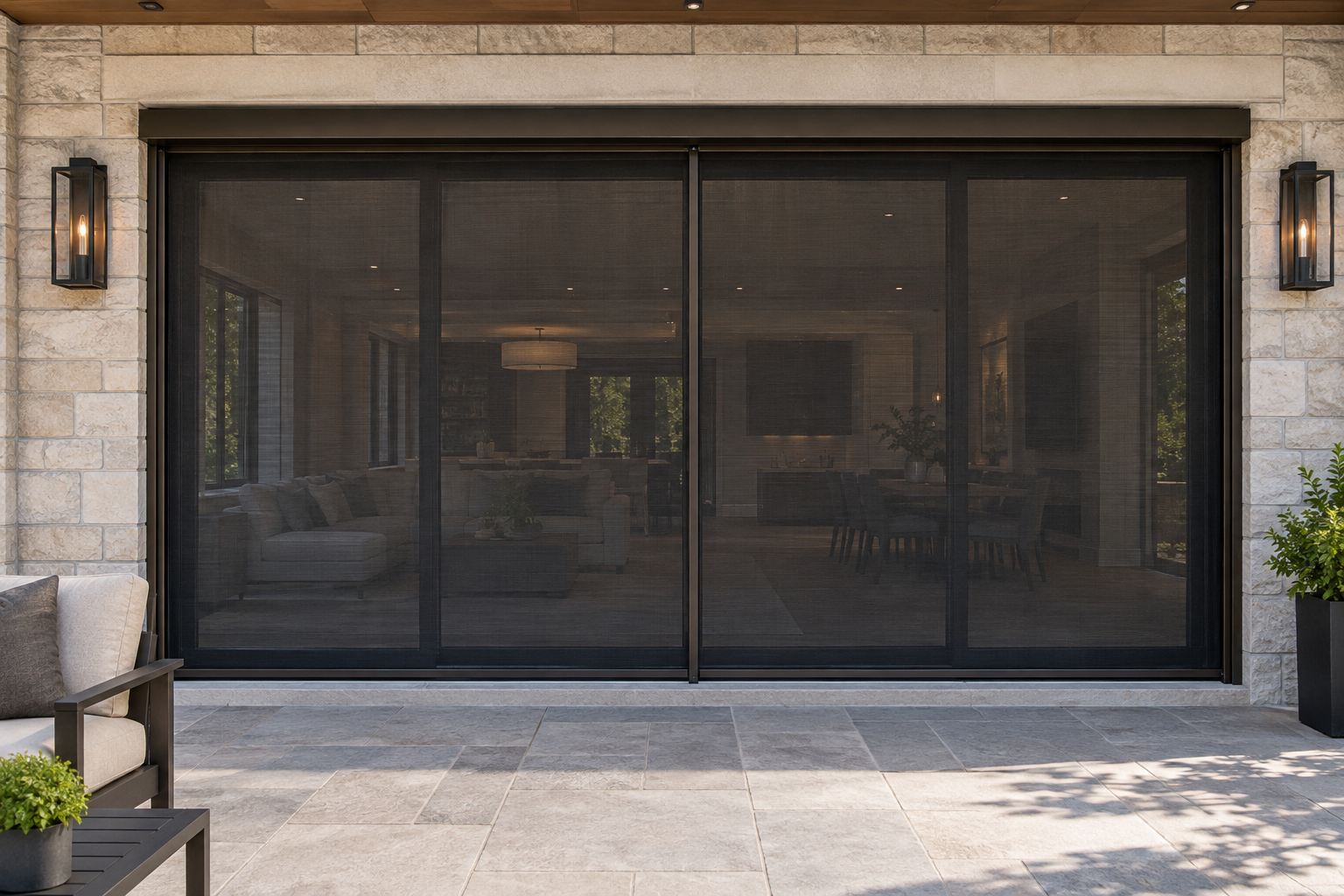
  • Wide multi-panel sliding door with two exterior screens meeting at a centre guide

    Wide Multi-Panel Slider

    Three- and four-panel sliding sets run well beyond the span of a single screen and get split into two panels sharing a centre guide, so each half operates independently and the fabric stays flat.

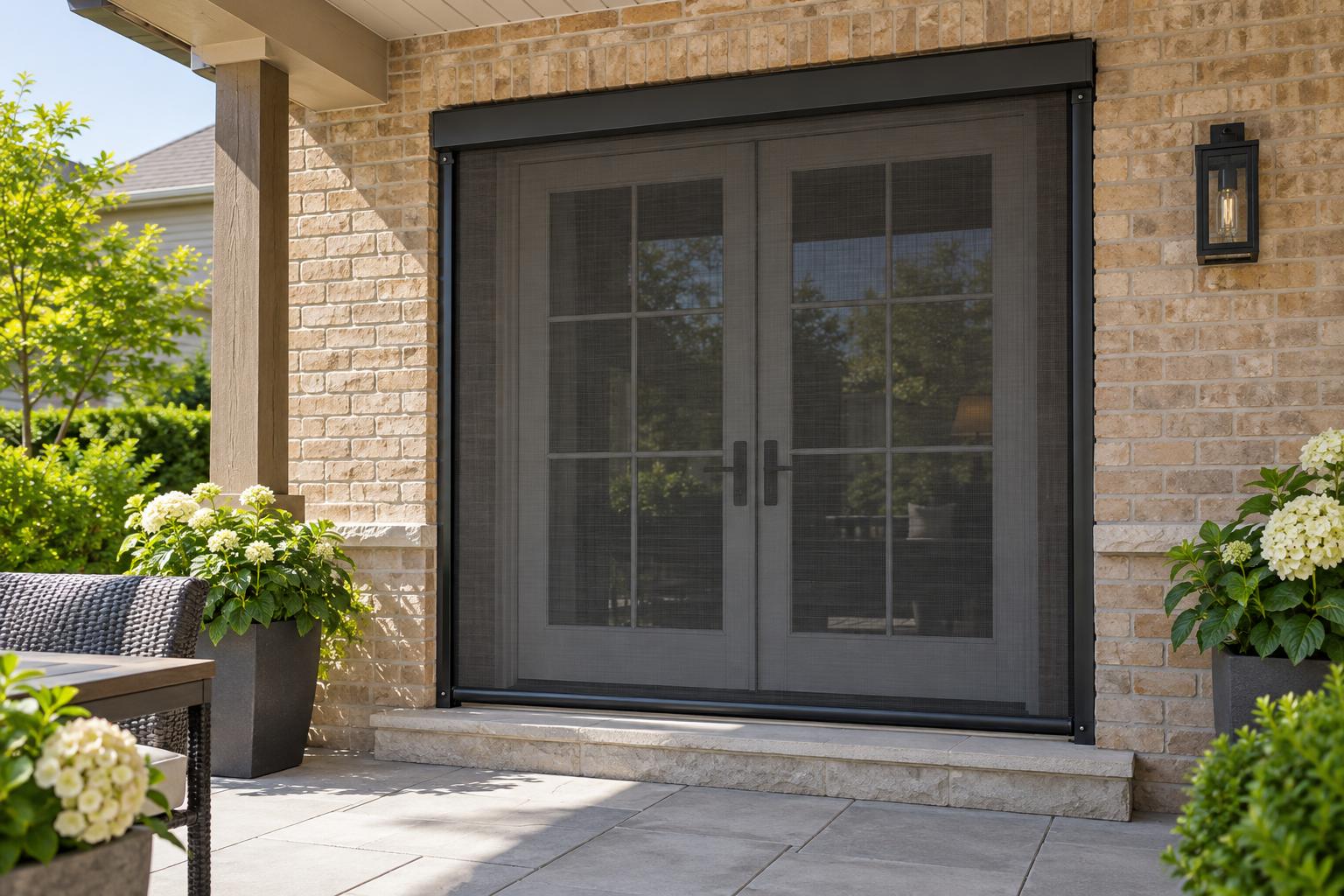
  • Exterior privacy screen fitted over an outward-swinging French door set

    French Doors

    French doors swing outward, so the screen is positioned to clear the door leaves at full travel.

  • Exterior screen covering a patio door together with its sidelights and transom

    Door With Sidelights or Transom

    Where the door is flanked by fixed glass or topped by a transom, the screen can be sized to the full glazed opening rather than the door alone - which is usually the point, since the sidelights carry as much solar load as the door does.

Somfy-Motorized as Standard

Every screen runs on a Somfy motor, so it raises and lowers at the touch of a button.

Prefer a hand crank? Manual operation is available on request for small, easy-to-reach openings. Manual vs motorized

Why Homeowners Choose Privacy Shade

  • Custom Fit

    Measured to the exact door opening

  • Certified Somfy Installer

    Genuine Somfy motors with full factory warranty

  • Operated From Inside

    Somfy radio remote or TaHoma app

  • Free On-Site Measurement

    No-obligation visit before anything is ordered

How Patio Door Screens Work

The screen mounts outside the glass and drops across the door opening. Heat and sightlines are stopped before they reach the door, and the screen rolls away when you want the opening clear.

  1. Roll Down

    Lower the screen across the door opening.

  2. Block the Heat

    Solar load is intercepted before it hits the glass.

  3. Gain Privacy

    Inward visibility drops while your view out stays.

  4. Roll Up

    Retract for a clear opening to the yard.

Patio Door Privacy Screens with a retractable privacy screen installed

Sun Tracking

A motorized screen with a Somfy sun sensor can drop for the afternoon load and retract once it passes.

Built for Ontario Glass Exposure

Engineered for Ontario conditions, with sensible limits we are upfront about.

  • UV Protection

    Depending on the fabric chosen, screens block up to 99% of UV - and they do it outside the glass, where it counts for heat.

  • Wind Resistant

    Side channels hold the fabric steady over a wide door opening. Capacity follows size and fabric openness - commonly around 160 km/h, higher on narrower doors.

  • Rain Protection

    PVC-coated polyester sheds water rather than soaking through, cutting how much driving rain reaches the door.

  • Summer Heat Relief

    The largest gains come on south- and west-facing doors during the hottest part of a GTA summer afternoon.

  • Durable Materials

    Marine-grade anodized or powder-coated aluminium resists corrosion through freeze-thaw cycles.

  • Low Maintenance

    Fabrics wipe clean and the hardware is built to need very little ongoing attention.

Toronto & the GTA

Why the Screen Belongs Outside the Glass

Patio doors combine two problems in one opening: a large expanse of glass and the busiest connection between the house and the yard. Interior blinds address the light but arrive too late to stop much of the heat, and they get in the way of a door in daily use.

An exterior screen works earlier in the sequence. It intercepts a large share of the solar load before it reaches the glass and cuts inward visibility during the day, while the room behind keeps its outward view.

See Common Configurations
Patio Door Privacy Screens with a retractable privacy screen installed

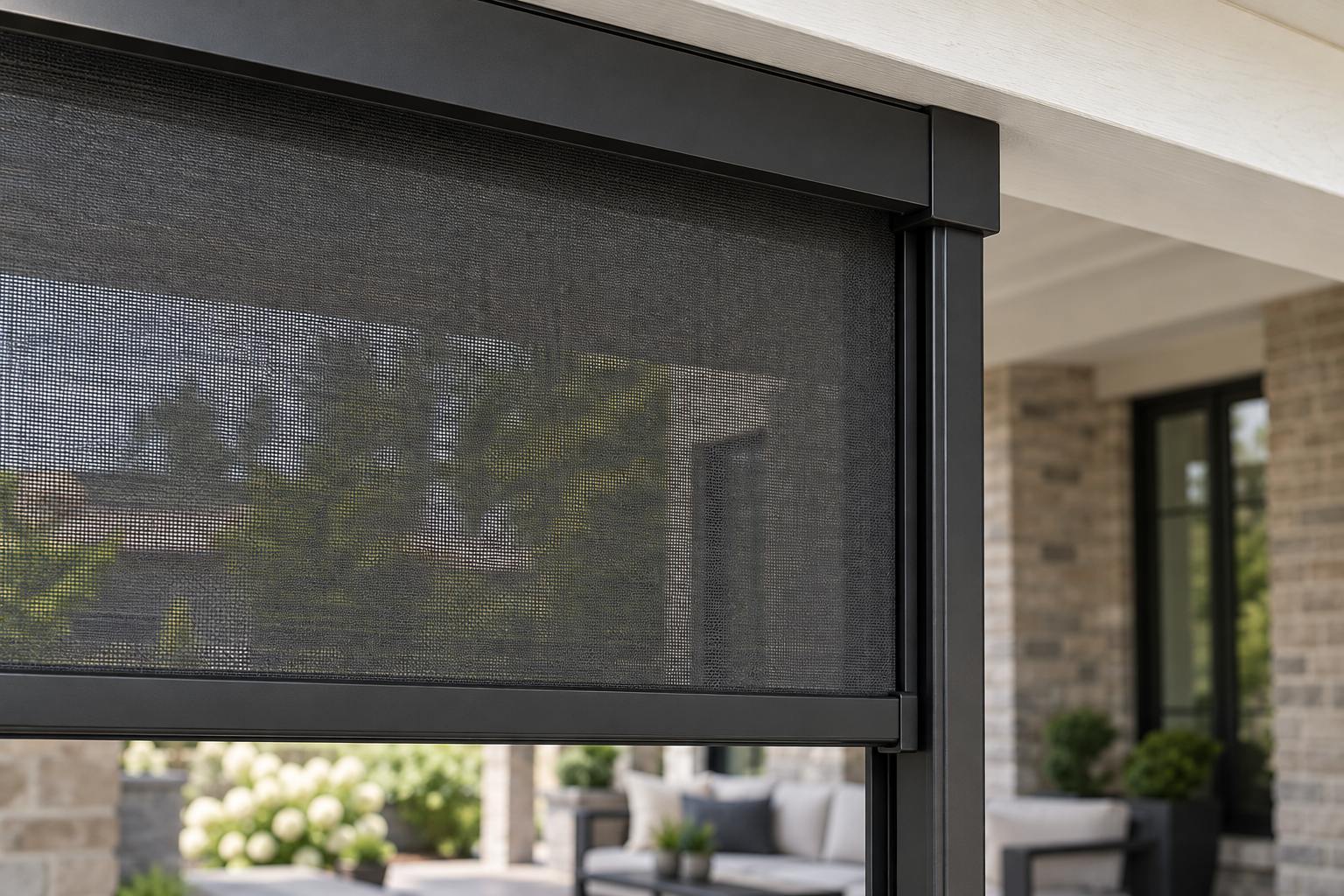
Hardware That Clears the Door

Everything mounts to the surrounding exterior surface rather than the door unit, and the channels are set so the door operates exactly as it did before.

Close-up of the aluminium housing, side guide channel and fabric of a retractable privacy screen
  • Surface-Mounted Housing

    Fixes above the opening, never into the door frame or glass.

  • Side Guide Channels

    Set clear of the door travel so operation is unaffected.

  • Weighted Bottom Bar

    Holds the fabric flat across a wide glazed opening.

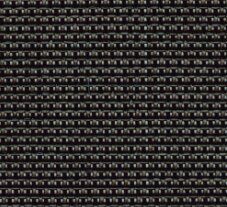
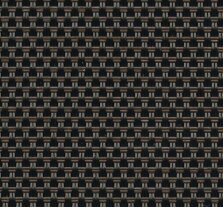
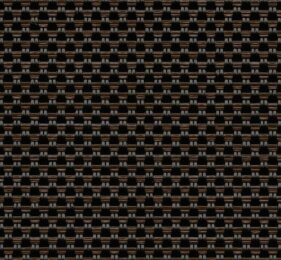
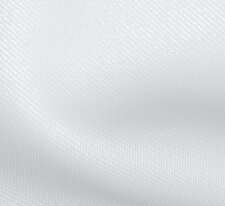
Available in Standard Colours

Match the housing, side channels and bottom bar to the door frame or the exterior trim. Hardware finishes are selected separately from fabric colour.

  • White
  • Beige
  • Brown
  • Black

Backed by a 10-Year Manufacturer Warranty

Every system carries a 10-year manufacturer warranty, including the Somfy motor supplied with it, and our installation workmanship is covered for 1 year. Both are provided in writing.

Installation Considerations for Patio Doors

The screen shares its opening with a door in daily use. Clearance is the whole planning exercise.

  • Nothing Fixes to the Door Unit

    The housing and channels mount to the surrounding exterior surface - the header above the opening and the wall returns or trim at each side - never to the door frame or the glass. That keeps the door's own warranty intact and means the screen can be removed later without touching the door. We confirm the substrate and choose anchors to suit brick, siding, stucco or wood at the measurement visit.

  • Door Swing and Screen Position

    Sliding doors travel within their own frame, so a screen sits clear of them without much planning. Outward-swinging French doors are the case that needs care: the screen has to be positioned so the leaves clear it at full travel, which usually means mounting further out from the opening face. We measure the swing arc on site rather than assuming a standard depth.

  • Sizing to the Glass, Not the Door

    Where a patio door has sidelights or a transom, the fixed glass carries as much solar load as the operable panels do. Screening the door alone leaves that untouched, so in most cases we size the screen to the full glazed opening. That changes the width and sometimes the mounting height, and it is worth settling early because it affects the quote materially.

  • Threshold and Bottom Bar Landing

    The bottom bar needs somewhere clean to land. On a level patio or deck immediately outside the door that is simple. Where there is a step down, a raised threshold, or a slope away from the house for drainage, we set the drop to the longest point and plan how the bar seals at the low end so the screen closes properly across the full width.


Fabric Options for Your Space

Each fabric performs differently across privacy, view-through, airflow, and UV blocking. We help you choose the right option for the way the space is used.

TuffScreen

Insect & weather protection
45% Openness

Heavy-duty insect mesh with maximum airflow. Neighbours can see through clearly, so privacy is not a feature of this fabric.

Privacy Low
View Through High
Airflow Maximum
UV Blocking 55%

45% Openness

Recommended:

  • Screened-in porch
  • Cottage deck
  • Gazebo ventilation
View Fabric Details

SunTex 90

Solar & light control
10% Openness

Balanced solar screen that cuts heat and glare while preserving reasonable outward visibility from inside the space.

Privacy Some
View Through Medium
Airflow Low
UV Blocking 90%

10% Openness

Recommended:

  • Sun-exposed patio
  • West-facing deck
  • Open backyards
View Fabric Details

SunTex 95

Best all-around choice
5% Openness

Our most popular fabric with solid daytime privacy, excellent UV blocking, and a comfortable filtered-light quality inside.

Privacy High
View Through Low
Airflow Minimal
UV Blocking 95%

5% Openness

Recommended:

  • Backyard patio
  • Pergola enclosure
  • Residential deck
View Fabric Details

SheerWeave 4800

Maximum privacy
1% Openness

Near-opaque daytime privacy with softly diffused interior light. Neighbours cannot make out occupants or furnishings.

Privacy Maximum
View Through Minimal
Airflow None
UV Blocking 99%

1% Openness

Recommended:

  • Urban patio
  • Balcony privacy
  • Street-facing porch
View Fabric Details

Soltis Proof 502

Day & night privacy
0% Openness

Fully opaque fabric that provides complete visual blackout and total weather enclosure from either side, day or night.

Privacy Maximum
View Through None
Airflow None
UV Blocking 100%

0% Openness

Recommended:

  • Day/night privacy
  • Complete blackout
  • Weather protection
View Fabric Details

PanoramaFR

Preserve your view
0% Openness

Near-clear enclosure that preserves your view while blocking weather and UV. Fire rated.

Privacy None
View Through Maximum
Airflow None
UV Blocking <98%

0% Openness

Recommended:

  • Waterfront / scenic view
  • Weather enclosure
  • Fire-rated applications
View Fabric Details

Patio Door Privacy Screen FAQs

Will the screen interfere with opening my patio door?

No. The screen mounts outside the door on the surrounding exterior surface and the side channels sit clear of the door travel, so the door operates exactly as it did before.

On outward-swinging French doors the screen is positioned further out from the opening face so the leaves clear it at full travel. We measure the swing arc during the site visit rather than assuming a standard depth.

What size screen is needed for a standard sliding patio door?

A standard two-panel slider is typically 1.8 to 2.4 metres wide, which a single screen panel covers comfortably. Three- and four-panel sliding sets run well beyond that and are split into two panels sharing a centre guide so each half operates independently and the fabric stays flat.

Can a patio door with sidelights or a transom still be screened?

Yes, and in most cases we recommend sizing the screen to the full glazed opening rather than the door alone. Fixed sidelights and transoms carry as much solar load as the operable panels, so screening only the door leaves the main heat source untouched.

It changes the width and sometimes the mounting height, so it is worth settling at the measurement visit because it affects the quote.

Can the screen be operated from inside the house?

On motorized systems, yes - with a Somfy radio remote. Compatible systems can also be controlled through the TaHoma app with a TaHoma hub.

That is the main argument for motorizing a patio door screen specifically: the screen covers the opening you walk through, so operating it from inside avoids stepping out to adjust it.

How much can a patio door screen help with heat?

The gain comes from stopping solar energy outside the glass rather than after it has entered. Depending on the fabric chosen, screens block up to 99% of UV, and the effect is most noticeable on south- and west-facing doors through a GTA summer afternoon.

We do not publish a specific temperature reduction, because the real figure depends on the glazing, the room, and the exposure. What we can say is that intercepting the load outside is materially more effective than an interior blind doing it inside.

Will the screen damage my door or void its warranty?

Nothing fixes to the door unit or the glass. The housing and channels mount to the surrounding exterior surface - the header above the opening and the wall returns or trim at each side - so the door and its warranty are untouched, and the system can be removed later without affecting the door.

Can I still see out through the screen?

Yes, and this is one of the main advantages over interior blinds. With 5 percent or 10 percent fabric the outward view from inside the room stays usable during the day, while visibility inward from the yard is reduced much more strongly.

Can people see in at night?

Solar screen fabrics work by contrast, so the effect reverses after dark: once the room is lit brighter than outside, people outside can see more than they can during the day. Because a patio door usually opens off a main living room, that matters here more than on most applications. Soltis Proof 502 is the fully opaque option if evening privacy is a firm requirement.

Does the screen keep insects out when the door is open?

A lowered screen forms a physical barrier across the opening, which reduces insect entry considerably while still letting air through. If insects rather than heat are the main reason for the project, TuffScreen at 45% openness is the dedicated insect mesh - it prioritises airflow and insect control rather than privacy or solar performance.

How long does installation take?

A single patio door screen typically takes about 90 minutes. Wide multi-panel openings and motorized systems with wiring take longer, and most appointments finish within two to four hours. We confirm expected timing when we quote.

What warranty is included?

Every system carries a 10-year manufacturer warranty, which includes the Somfy motor supplied with it, and our installation workmanship is covered for 1 year. Both are provided in writing.

View All FAQs

Ready to Stop Heat at the Door?

Tell us the door type and which way it faces, and we will recommend the screen size, fabric and operation to match.