What to Know Before You Decide
For west-facing patios in Ontario, a solar screen mesh with 3–5% openness factor is the best starting point. It blocks 85–95% of UV radiation, significantly reduces heat gain from low-angle afternoon sun, and maintains enough outward visibility to keep the view open. If full privacy and maximum heat blockage matter more than the view, a darker colour in the same openness range performs better than a lighter one.
West-facing patios are the hardest orientation to make comfortable in Ontario. The sun is low-angle from mid-afternoon through sunset, shining directly into the space at eye level rather than from above. Standard overhead shade — an umbrella or pergola roof — does little against a low western sun. A vertical privacy screen on the west face is often the only solution that actually works.

Why west-facing sun is the hardest to manage
East-facing patios get morning sun that is relatively cool and manageable. South-facing patios get overhead noon sun that a pergola or umbrella handles. North-facing patios get little direct sun at all. West-facing patios get direct afternoon and evening sun — the hottest, most glare-heavy sun of the day — at the exact angle that cuts under any overhead structure.
In Toronto and the GTA, peak afternoon temperatures combine with low western sun to make west-facing patios genuinely uncomfortable from roughly 2 PM onward on a clear summer day. The patio technically has good hours — morning and early afternoon are fine. But the best outdoor dining and relaxation hours coincide precisely with the worst sun angle.
How solar screen fabric reduces heat from western sun
Solar screen mesh fabrics are designed specifically for this problem. The woven fibres block direct solar radiation, reduce the radiant heat that passes through the screen, and cut glare significantly. The openness factor determines how much of each is blocked.
A 3% openness factor fabric blocks approximately 95% of UV radiation and significantly reduces heat gain. A 5% OF fabric blocks around 90% of UV. Both are effective for west-facing sun control. The trade-off between them is view clarity: 5% OF allows a slightly more open view than 3% OF, while 3% OF provides a darker, cooler interior effect and better nighttime privacy.
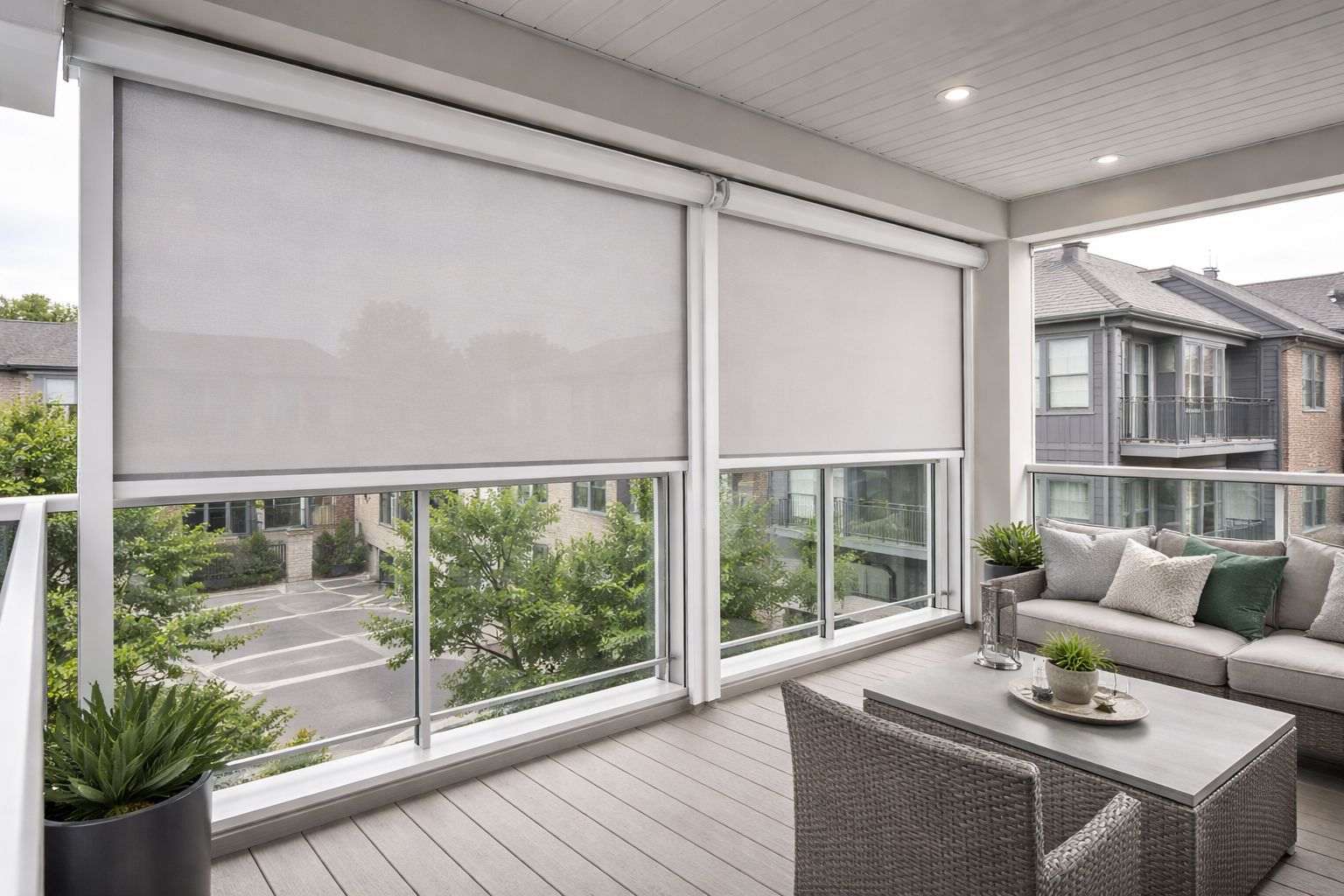
Colour selection and heat performance
Darker colours in the same openness factor outperform lighter colours for heat and glare reduction from the exterior. A charcoal or dark grey 5% OF mesh will perform closer to a 3% OF light grey mesh for solar control. This is because darker fibres absorb more radiation at the screen surface rather than allowing it to pass through.
From the interior, darker fabrics also maintain better outward visibility — less glare reflects back into the eye from a dark screen surface than from a white or beige one in bright sun conditions.
Fabric recommendations by priority
- Best view retention with good heat control: 5% OF solar mesh in charcoal or dark bronze.
- Best balance of heat blockage and privacy: 3% OF solar mesh in charcoal or dark grey.
- Maximum heat blockage and full privacy: 1–2% OF dense PVC mesh — minimal airflow, near-blackout effect.
- Clear daytime visibility with moderate heat reduction: 10% OF mesh — not recommended for west-facing sun where heat is the primary issue.
- Night-time use where interior privacy matters equally: 3% OF or lower regardless of orientation.
West-facing patios across the GTA
West-facing patio conditions are consistent across the GTA — Toronto, Vaughan, Markham, Richmond Hill, and Aurora all get the same Ontario sun path. New construction and infill townhomes where the backyard faces west are particularly affected because the rear of the home captures the full western exposure without trees or adjacent structures to shade it.
If you are unsure of the patio orientation, the shadow pattern is a reliable indicator: if the shadow of the house falls across the patio in the morning and the patio is in full sun by mid-afternoon, it faces west.