What to Know Before You Decide
Manual privacy screens are the better value for single, easy-to-reach openings. Motorized screens are worth the upgrade when you have multiple screens, wider openings, or need them adjusted frequently through the day — that is when the convenience gap becomes hard to ignore.
Many buyers assume the choice is mostly about whether they want a crank or a remote. In practice, the better question is how the space will actually be used once the privacy screen system is installed.
Some projects only need one reachable opening screened for privacy or glare. Others need two or three larger openings moving together on a pergola, deck, or backyard patio edge. That is where the difference between manual and motorized becomes much more important.
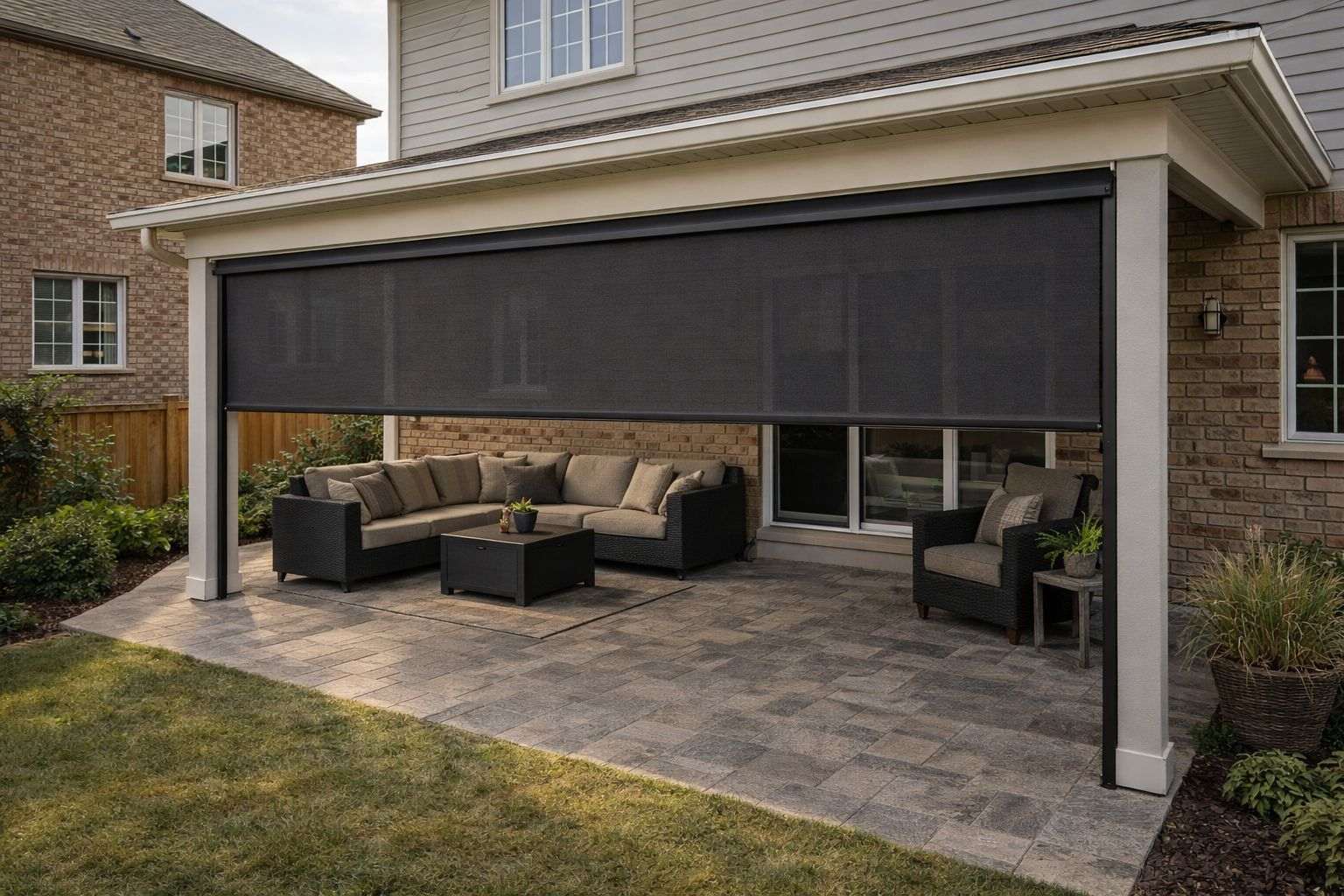
The real decision is about usability, not just hardware
Manual screens are often completely reasonable when the opening is simple and the user can reach the control easily. Motorized screens become easier to justify when the project is wider, uses multiple screens, or needs to be adjusted often through the day as light and privacy conditions change.
That is why the right answer depends less on labels and more on the layout. A single patio side near the seating area is very different from a three-bay pergola or an elevated deck where two screens should move together.
When manual privacy screens make the most sense
Manual screens are usually the better value when the project is straightforward and daily operation will stay easy.
- The project only needs one screen or one dominant opening.
- The control point is easy to reach from the patio, porch, or deck.
- The screen is not especially wide or awkward to operate.
- The budget is tighter and the extra convenience of motorization is not critical.
- The opening looks more like a patio door edge, a single porch side, or one patio face rather than a grouped multi-screen setup.
When motorized privacy screens usually win
Motorization is usually worth it when the screen system needs to feel easy enough to use regularly instead of only occasionally.
- Two or more screens need to be adjusted as part of the same project.
- The openings are wider and would feel less convenient with manual operation.
- The screens will be used often to manage privacy, glare, bugs, or wind over the course of the day.
- The project is on a pergola, elevated deck, or larger patio where grouped control matters.
- The owner wants remote or smart-home style operation through Somfy controls.
Opening count and width change the recommendation fast
The more openings the project includes, the more motorization tends to make sense. A single screen can be simple. Two or three screens on the same structure start to feel very different if each one has to be adjusted manually every time the sun shifts or the neighbour sightlines become more noticeable.
That is especially true on pergolas, larger patios, and exposed decks where the comfort problem moves from one side of the space to another as the day changes.
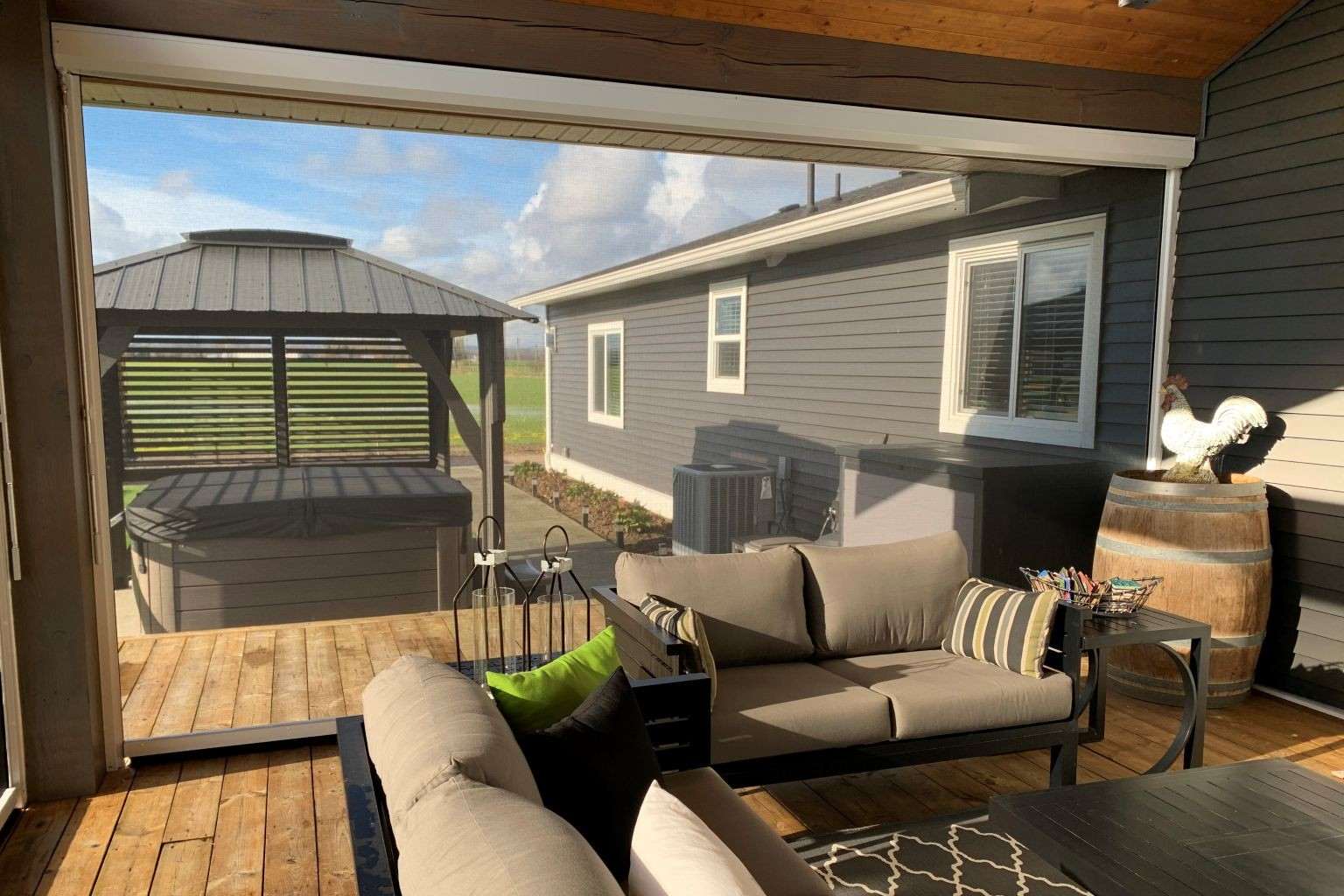
Best fit by space type
Manual screens often fit smaller or simpler openings best, such as a single patio side, a patio door condition, or one porch face. Motorized screens tend to suit grouped pergola openings, wider deck edges, and backyard layouts where the screens will be used often.
Balconies and tighter urban openings can go either way. If the balcony only needs one straightforward screen, manual can work. If the space is harder to reach, uses multiple sides, or needs more frequent adjustment, motorization becomes a much stronger argument.
Questions to ask before choosing
- How many separate openings need screens?
- Will the screens be adjusted every day or only occasionally?
- Are the controls easy to reach once furniture is in place?
- Does the project need one screen, two sides, or a larger grouped setup?
- Would the owner actually use the system more if operation were simpler?
A practical rule of thumb
If the screen project is small, reachable, and limited to one opening, manual is often enough. If the project is bigger, grouped, wider, or expected to be used constantly, motorized is usually the better long-term choice.
If you are still deciding whether the project even needs a screen in the first place, it also helps to compare that question against awnings versus privacy screens before narrowing the operation style.