What to Know Before You Decide
Privacy screens work well on elevated decks because they block sightlines at the height where the exposure actually happens — not at ground level. Retractable screens mount to the deck framing or fascia and retract fully when not needed, leaving the view open.
Elevated decks are some of the hardest outdoor spaces to make comfortable because they are exposed on more than one side and often sit directly in the line of sight of neighbouring homes.
That is why privacy screens for decks are often more useful than homeowners expect. They solve problems where they actually happen: at the height of the seating area, not only at property-line height, and they are usually easier to compare properly once you have looked at the wider privacy screens hub.
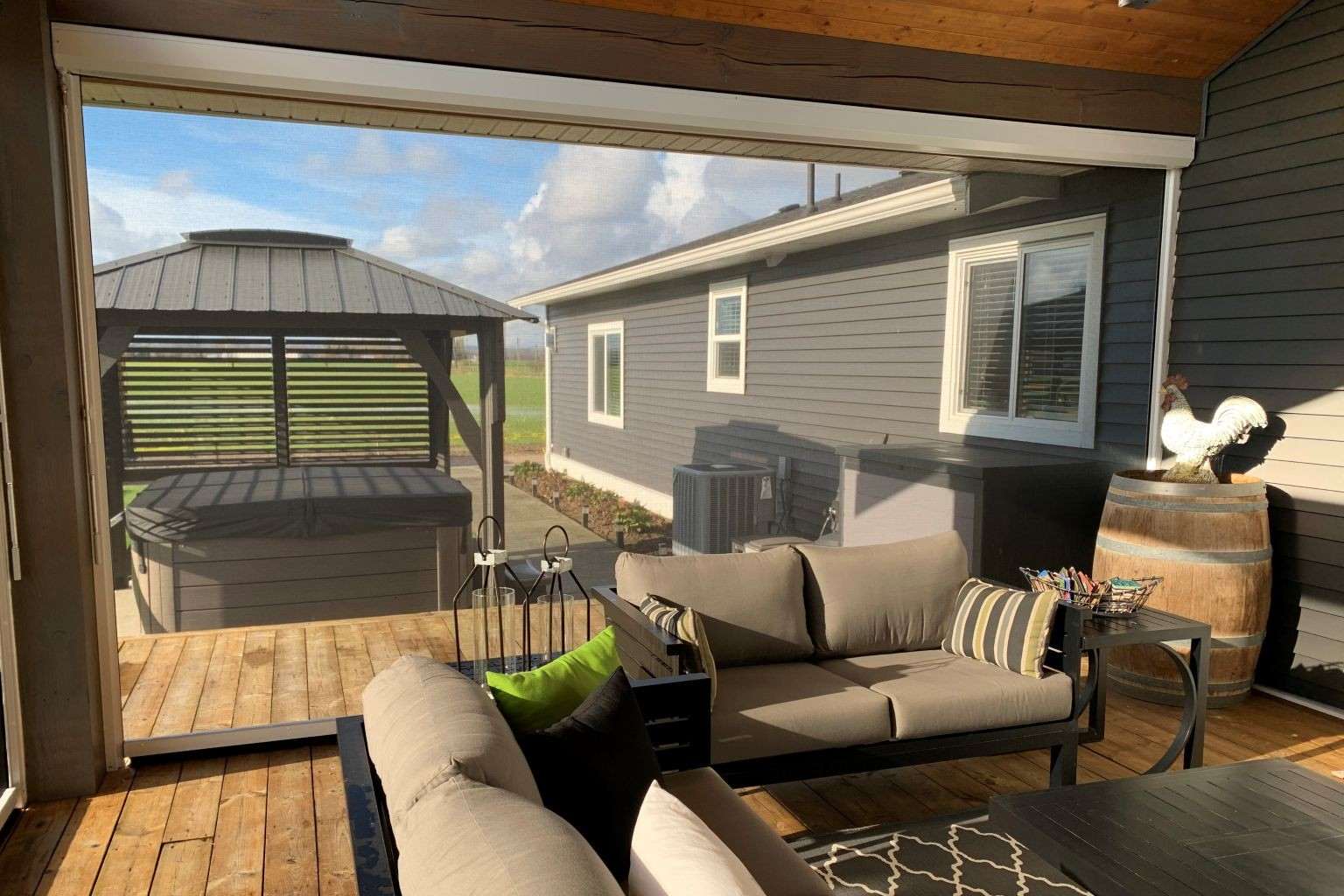
Why elevated decks feel more exposed than patios
Raised decks usually sit above fences, above grade changes, and closer to neighbouring second-storey windows or adjacent decks. Even when the property has decent fencing, the outdoor seating area can still feel completely visible once you are up on the deck.
They also tend to catch more wind and more low-angle sun than a ground-level patio. That combination is why elevated decks often need a more targeted side-protection strategy instead of another generic backyard privacy fix.
What screens solve better than fences or temporary panels
- Neighbour sightlines coming from other decks or upper-storey windows.
- Late-day glare entering from the side rather than from directly overhead.
- Wind crossing the seating area on open deck edges.
- The need for privacy without permanently boxing in the whole structure.
- A cleaner, retractable look compared with fixed curtains, lattice, or temporary barriers.
The layouts that work best on elevated decks
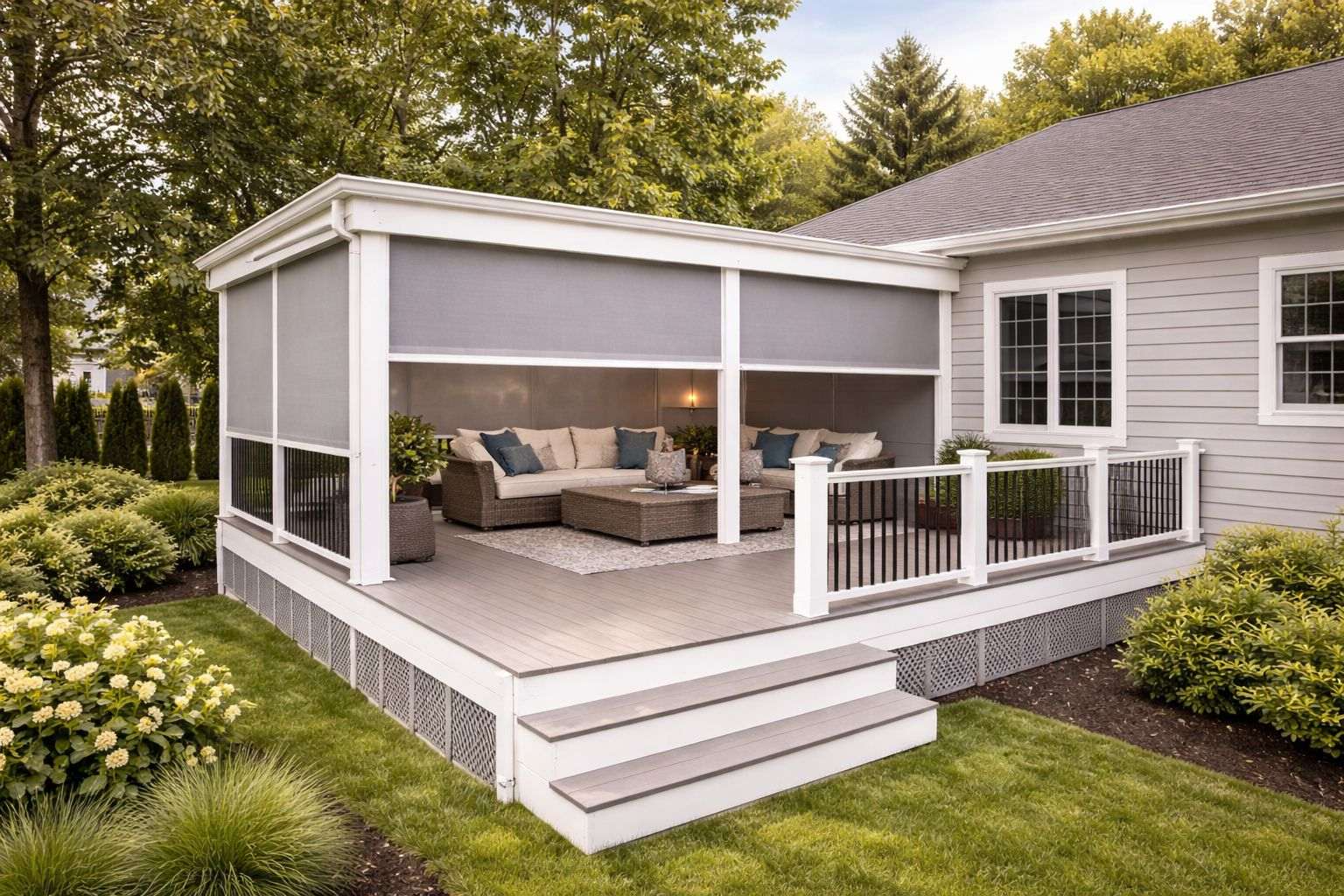
Most elevated deck projects do not need every side screened. The better plan is usually to identify the side that creates the strongest neighbour exposure, wind, or glare, then decide whether the project needs one screen, an L-shape, or a broader wrap.
That is why the most common layouts are a single back screen, a back-plus-one-side arrangement, or a wider grouped setup on the most exposed edges. The right layout depends on where the comfort problem is coming from, not just on the deck footprint.
Which fabrics are usually worth comparing first
On elevated decks, the best fabric often comes down to how much privacy should be added without making the deck feel too closed. SunTex 95 is a common starting point because it balances privacy, glare control, and daylight well. SheerWeave 4800 is worth comparing when the deck is especially visible from nearby homes or from the street. SunTex 90 can make sense when the owner wants a more open feel.
When motorization becomes worth it on a deck
If the elevated deck needs more than one screen, motorization usually becomes easier to justify quickly. That is especially true when the project includes two exposed sides or when the screens are wide enough that grouped control will matter in daily use.
If the deck only needs one reachable screen, a manual setup may still be enough. If you are weighing that choice directly, it helps to compare manual versus motorized privacy screens before locking in the operation style.
When an awning still belongs in the conversation
If the deck is also open above and the main issue is direct overhead sun on the seating area, the project may need an awning for deck shade, either instead of a screen or alongside one. Screens solve side exposure well. Awnings solve overhead exposure well. Elevated decks sometimes need both conversations.
What to send for a useful quote
- A few photos of the deck from inside and from the yard.
- Rough width and height of the main opening or exposed side.
- A note about which side feels worst for privacy, wind, or glare.
- Whether the deck likely needs one screen or more than one.
- Any photos that show neighbouring deck or window sightlines.