What to Know Before You Decide
Zip screens lock into a sealed channel on all four edges of the opening, which significantly improves wind resistance and insect control compared to standard retractable screens. For most privacy and sun-screening applications, a standard retractable screen handles the job at lower cost. Zip screens are worth the upgrade when the space is an outdoor room, a covered pergola, or an opening where wind and insects are as important as privacy.
The term "zip screen" refers to a specific mechanism: the screen fabric has a reinforced edge that zips into a guide channel on each side of the opening as the screen deploys. That sealed perimeter is the main difference from a standard retractable privacy screen, which guides the fabric on two sides but does not lock it in.
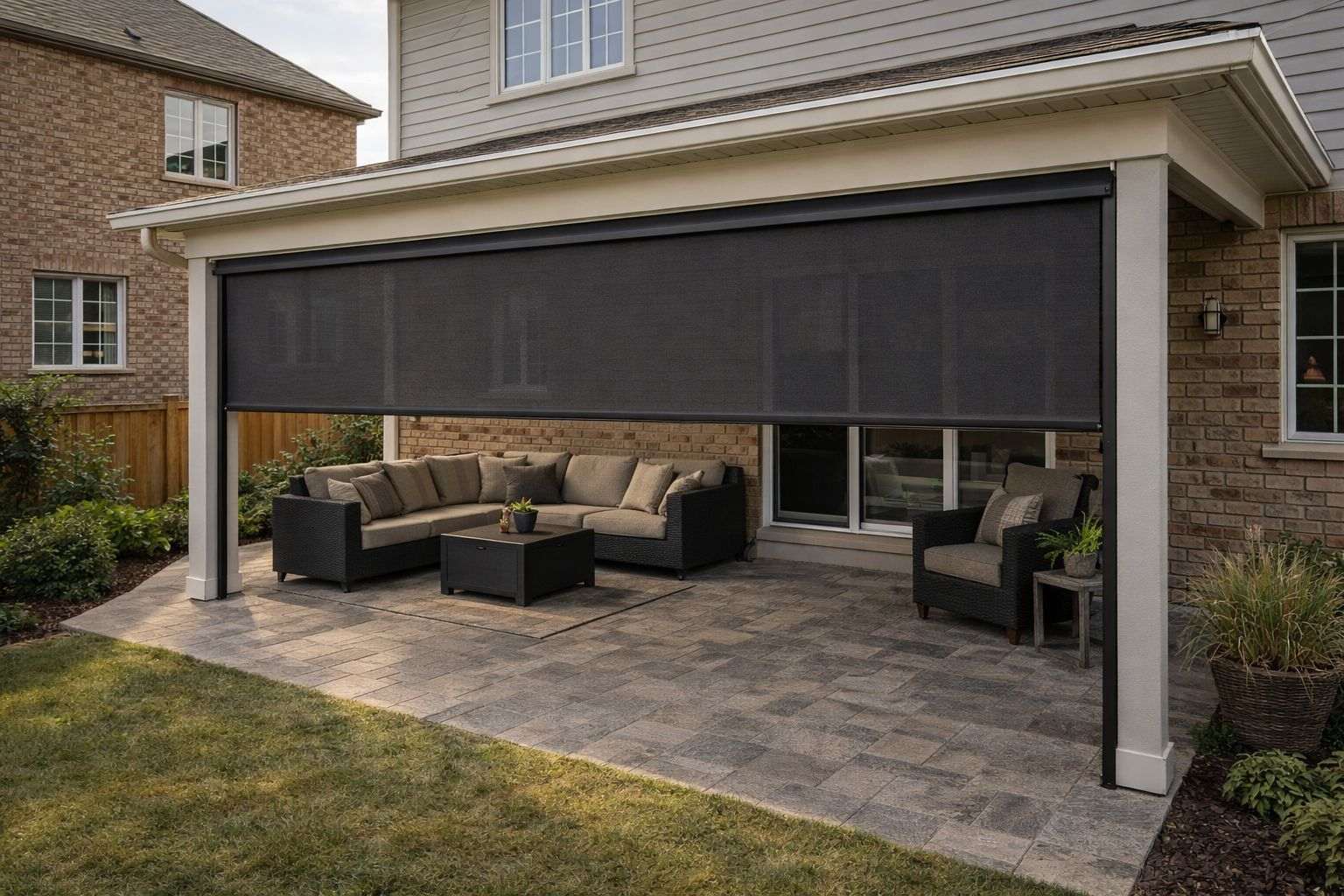
How zip screens work
A zip screen has a zipper bead sewn into both vertical edges of the fabric. As the screen rolls down, those beads track into a slim aluminum channel on each side of the opening. The result is a fabric panel that is locked in on all four sides — top (roller housing), bottom (weighted bar), and both sides (zipper channels).
That sealed perimeter prevents the fabric from billowing, reduces wind load on the screen hardware, and eliminates gaps that insects can pass through. In a pergola or outdoor room used as a living space, that matters. On a basic patio side screen used primarily for privacy, it usually does not.
What standard retractable screens do well
Standard retractable screens use a side-tension or guide-cable system that keeps the fabric reasonably flat without a sealed channel. For patio, deck, balcony, and patio door applications, that system handles privacy, glare, and moderate wind without the added complexity and cost of a zip mechanism.
Standard screens are also simpler to service, easier to repair, and available in a wider range of fabric and hardware options. For the majority of residential and light commercial privacy screen projects, a standard retractable screen is the right product.
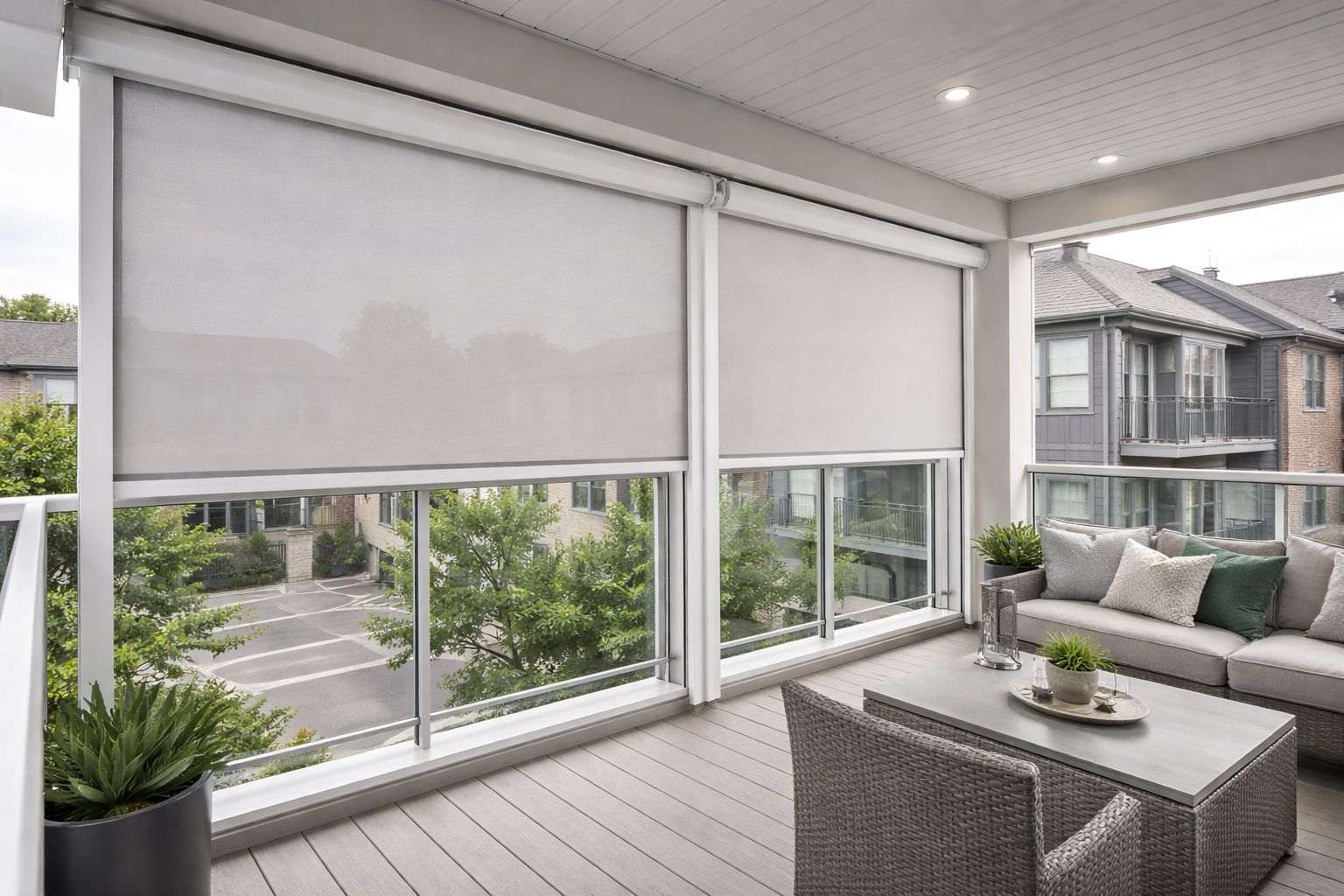
When zip screens are worth the upgrade
- The space is an outdoor room or screened porch used as a living area — not just occasional shade.
- Insect control is as important as privacy, and gaps along the screen edges would defeat the purpose.
- The opening is wide and exposed to sustained wind that would cause standard screens to bow or billow noticeably.
- The project is a commercial space — restaurant patio, hotel terrace — where full enclosure matters for guest comfort.
- The opening uses a clear vinyl or transparent screen panel that needs to stay flat for visibility.
When standard retractable screens are the better choice
- The project is primarily for privacy, glare reduction, or low-angle sun screening.
- The budget favours a simpler, lower-cost system without premium hardware.
- The opening is not large enough for wind load to be a meaningful concern.
- The space does not need full insect sealing.
- Multiple independent screens are planned — standard screens are easier to manage across several openings.
Sizing and application fit
Zip screens are most common on larger openings — typically 8 feet wide or more — where the sealed edge provides a meaningful structural benefit. On narrower porch or patio door openings, the standard retractable system handles the conditions without the added cost.
If you are comparing the two for a specific project, the best approach is to describe the opening size, wind exposure, and primary use case. That narrows the recommendation quickly.