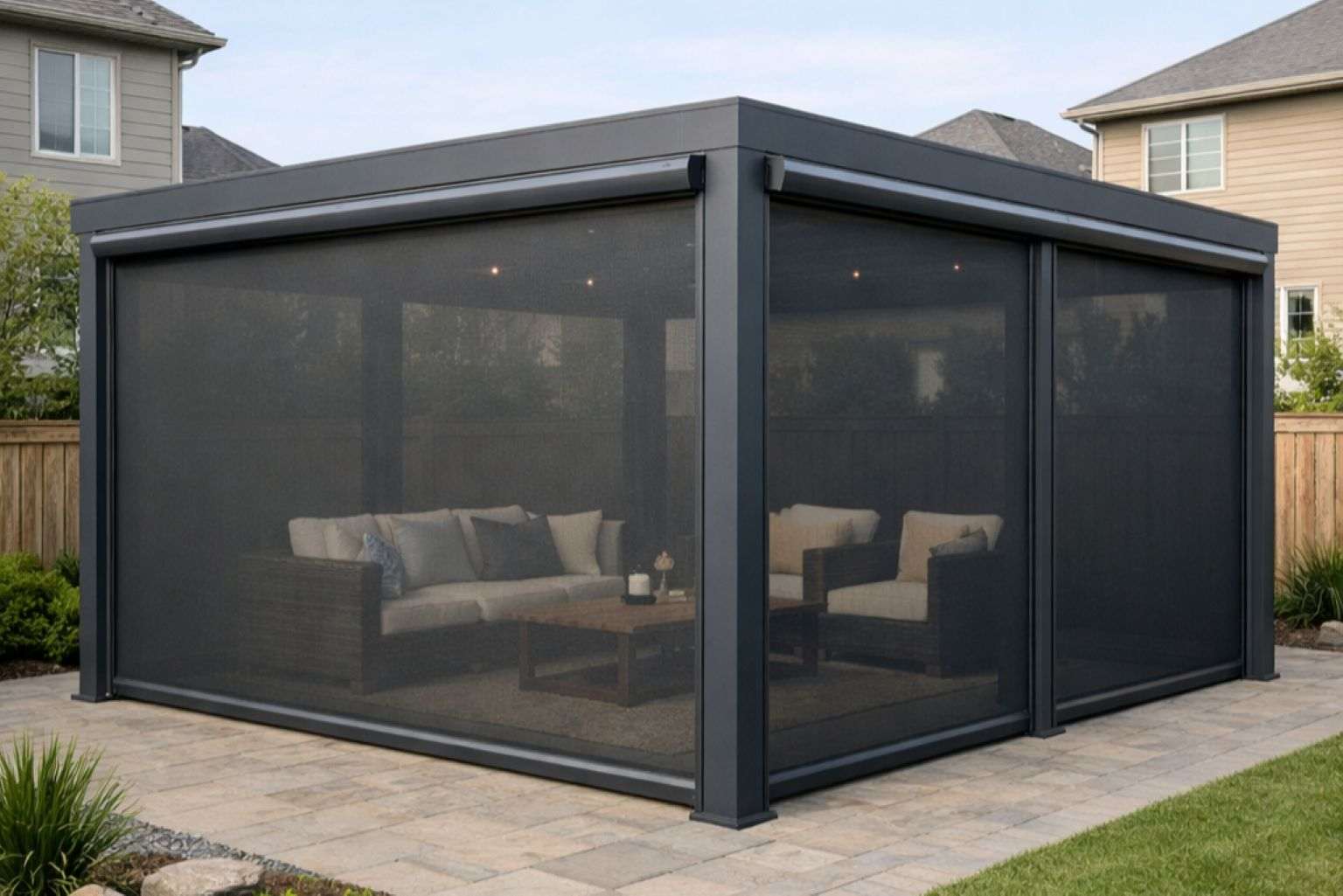
Retractable screens on hotel properties tend to be evaluated against a short list of practical questions: will guests actually use the space more, can the system stay up through turnover and daily service, and does it hold up through multiple seasons without looking dated. Unlike residential projects, hotel screens are judged on operational reliability as much as on appearance, because a screen that jams during peak service directly affects a guest's experience and, in many cases, a published review.
On larger properties with multiple terrace or pool-deck zones, installations are usually planned around shoulder-season windows so that guest disruption is minimized and staff have time to adjust to the new operating routine before peak occupancy. Motorized grouped controls are normally specified because they match the pace of hospitality operations: a morning open, adjustments through the afternoon, and a single-press close at the end of service. Grouped control also reduces the training overhead when seasonal staff rotate through the property.
Fabric selection leans toward lower-openness solar mesh where pool-deck glare and privacy from adjacent suites are priorities, and higher-openness options where dining views and patio atmosphere matter more. The balance is usually set during the site visit once we understand the daily guest flow and which zones are most exposed.