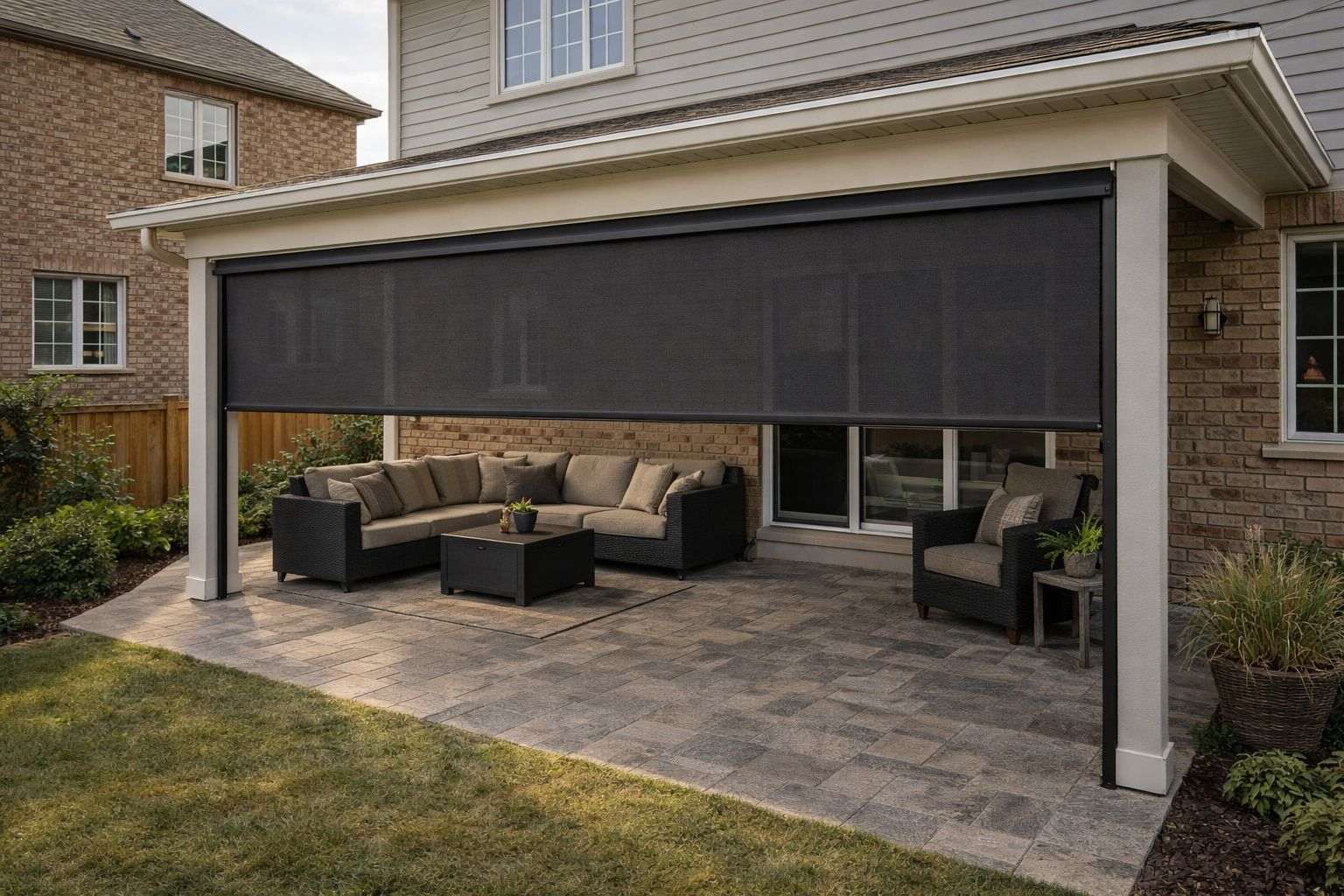
Office privacy screen projects usually sit inside a larger set of building and tenancy decisions: who approves the installation, who owns the asset at the end of the lease, how the work coordinates with existing building systems, and whether the screens count as a tenant improvement or a landlord capital item. The specification is shaped as much by those questions as by the outdoor comfort problem the screens are meant to solve.
We plan installations around those coordination realities - reviewing mounting options that do not interfere with roof membranes or curtain-wall warranties, confirming power sources for motorized systems, and providing the technical documentation landlords commonly request before approving an exterior modification. Terrace and rooftop projects are usually specified with motorized grouped controls because facilities teams want consistent operation across multiple bays without relying on individual tenant action.
On shared amenity spaces, lighter-openness fabrics are often preferred so that the screens preserve the architectural lines of the building and provide meaningful shade and wind buffering without making the amenity feel enclosed. On staff-only terraces and courtyards, fabric choice tends to shift toward higher privacy and glare control because those spaces are used for focused breaks, calls, and informal meetings where overlooking is a bigger issue than appearance.