What to Know Before You Decide
Clean a retractable privacy screen with a garden hose and, if needed, a mild soap. Do not use a pressure washer: it can pull the fabric out of the side channels. In winter, do not operate a screen that is frozen or iced. Raise screens in high winds and severe weather, whatever the season.
That covers most of it. The rest of this guide gives the routine step by step, the extra care clear vinyl needs, and what the manufacturer's warranty does and does not cover. It follows the manufacturer's care guidelines for the screen systems we install.
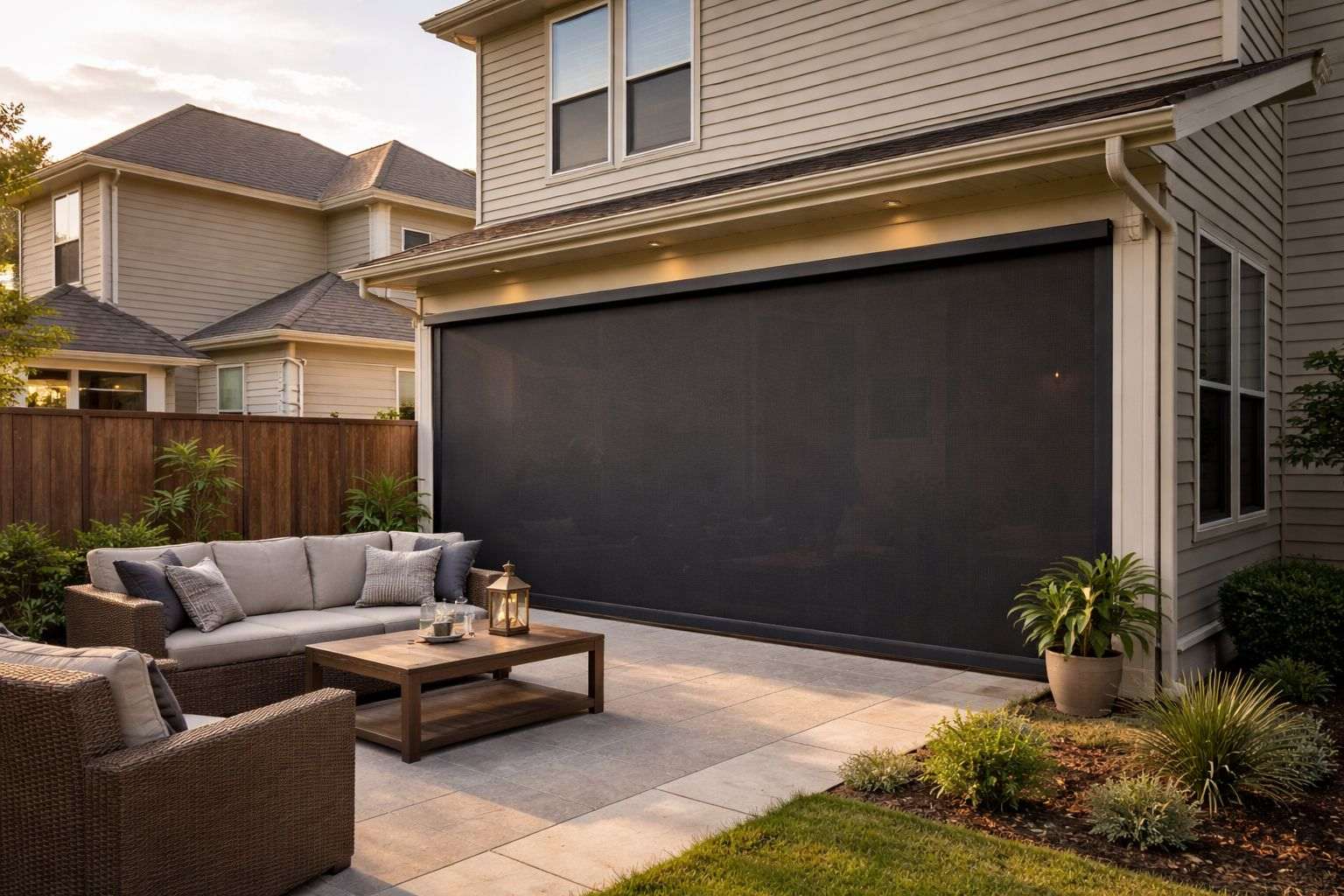
How do I clean a mesh screen?
- Lower the screen all the way.
- Rinse the housing, the side channels, and the fabric with a garden hose.
- If it needs more, use a mild soap. Test it on a small patch first to check it leaves no stain or residue.
- Rinse again and let the fabric dry before rolling it up.
- Keep the side channels and moving parts free of leaves, dust, and debris.
Why not a pressure washer?
The edges of the fabric are held inside the side channels. That is what keeps the screen flat and stops wind from pulling it loose. A pressure washer hits the fabric hard enough to pull those edges out of the channels, and getting them back in is a service call. A hose does the job without the risk.
How is clear vinyl different?
PanoramaFR clear vinyl needs more care than mesh, because scuffs, scratches, and hazing show on a clear surface. The manufacturer's care sheet is specific:
- Rinse with water and mild soap, then let it dry completely. A silicone squeegee speeds up drying.
- Never use harsh cleaners such as Windex, Rain-X, Pledge, or Simple Green.
- Never use polishes, scratch removers, or products made for commercial-grade vinyl or plastic.
- Use the cleaner made for PanoramaFR to limit distortion and hazing over time.
- Do not use a pressure washer.
What about winter?
Screens can be used in cold weather, with three rules:
- Do not operate a screen that is frozen or iced. Forcing it can damage the fabric and the motor.
- Brush snow, ice, and debris off the screen and out of the side channels before moving it.
- Check that everything moves freely before you run it the first time after a cold snap.
What should I do in high wind?
Raise the screens. A lowered screen works like a sail, and clear vinyl most of all. Screens are not designed to withstand all weather, and wind damage is not covered by the warranty.
Lowering a screen in strong wind is difficult, because the wind presses the fabric against the channels. Raising one still works. If a storm is forecast, raise the screens before it arrives. A wind sensor does this automatically and is recommended on motorized screens wider than 12 ft.
Is there anything to maintain on the motor?
No. The motors are sealed inside the roller tube. Two habits help: operate the screen while you can see it, with nothing in its path, and do not run it up and down continuously. If the motor stops after repeated use, it has gone into thermal protection and resets by itself in 10 to 45 minutes. Our guide to motorized screens in a power outage covers what to do when the power is off.
What does the warranty not cover?
The manufacturer warranty covers defects in materials and workmanship for 10 years, and it expects the care above. It does not cover:
- Damage from wind, rain, hail, snow, ice, or extreme temperatures.
- Misuse, neglect, or operating the screen outside these guidelines.
- Impact, obstructions, or forcing the screen.
- Normal wear and tear, including fading.
When should I call instead of fixing it myself?
Call us if a screen sticks, runs unevenly, stops short, or has come out of a side channel. Do not force it and do not use tools in the channels. Screens are designed to be maintenance free beyond cleaning, and most problems are quick for us to put right.