What to Know Before You Decide
Three things keep mosquitoes off a patio, deck, or porch: fewer places for them to breed, a repellent on your skin, and a physical mesh between you and them. The first two reduce bites. Only the mesh keeps insects out of the space altogether, and a retractable insect screen does that without leaving the porch or pergola closed in for the rest of the day.
This guide covers what Ontario public health advice says about mosquitoes, what you can do in the yard for free, and where a roll-up screen fits.
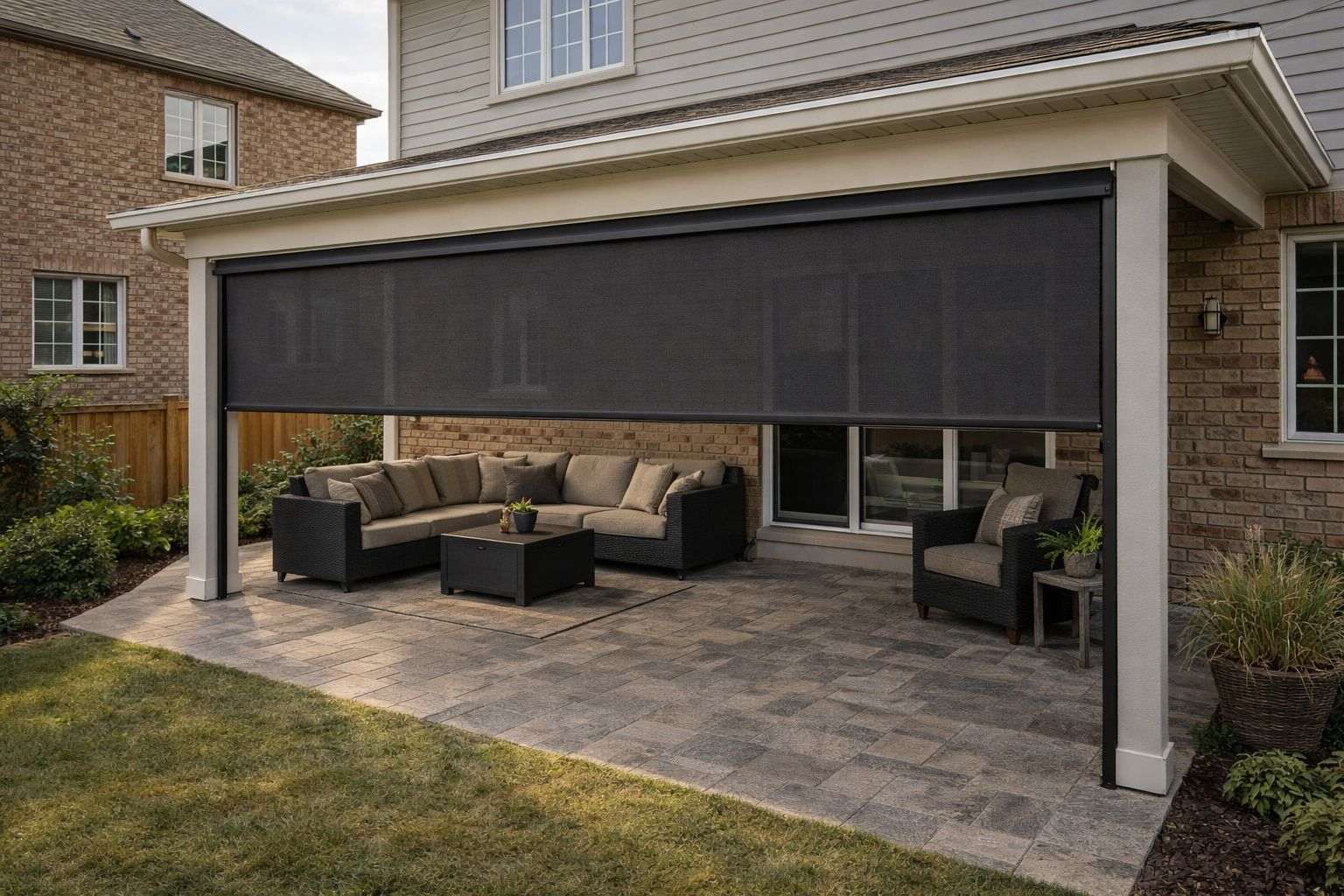
When are mosquitoes worst?
The Ontario government's West Nile virus guidance says most mosquitoes feed between dusk and dawn. That is the window when most people sit down to dinner outside, light the barbecue, or stay out after the kids are in bed.
It is also why bug problems feel worse on a covered porch or under a pergola than on an open lawn. Those are the places people sit still in the evening, which is when and where mosquitoes feed.
What can you do in the yard first?
Start with the steps that cost nothing. Ontario recommends these around the home:
- Empty standing water every week. Mosquitoes lay eggs in stagnant water, even small amounts: tires, rain barrels, toys, flower pot saucers, and wading pools.
- Keep bushes and shrubs clear of overgrowth and debris. Adult mosquitoes rest in dense shrubbery during the day.
- Cover up between dusk and dawn with a long-sleeved shirt, long pants, and socks.
- Use a repellent that contains DEET or icaridin.
Why do the bugs come back anyway?
Those steps lower the number of mosquitoes on your own property. They do nothing about the pond behind the lot, the neighbour with a clogged eavestrough, or the ravine at the end of the street. Repellent also has to be reapplied, and nobody wants to put it on for a quiet dinner at home.
A screen works differently. It does not thin out the insects; it keeps them on the other side of the opening. It does not wear off, and it protects everyone at the table at once, including guests who did not come dressed for it.
Which screen fabric keeps bugs out?
TuffScreen is the fabric we use for this. It is a heavy-duty insect mesh with 45% openness, the most open fabric in our range, so air keeps moving and the space stays bright. It is built for airflow and insect control, not for privacy.
The tighter fabrics keep insects out too, and add other jobs. SunTex 90 (10% openness) and SunTex 95 (5% openness) add sun control and privacy but let less breeze through. PanoramaFR is a solid clear vinyl sheet that stops insects, wind, and rain while keeping the view, with no airflow at all.
If bugs are the only problem, choose TuffScreen. If the same opening also faces a neighbour or the afternoon sun, a tighter fabric can solve both, and different sides of one structure can carry different fabrics.
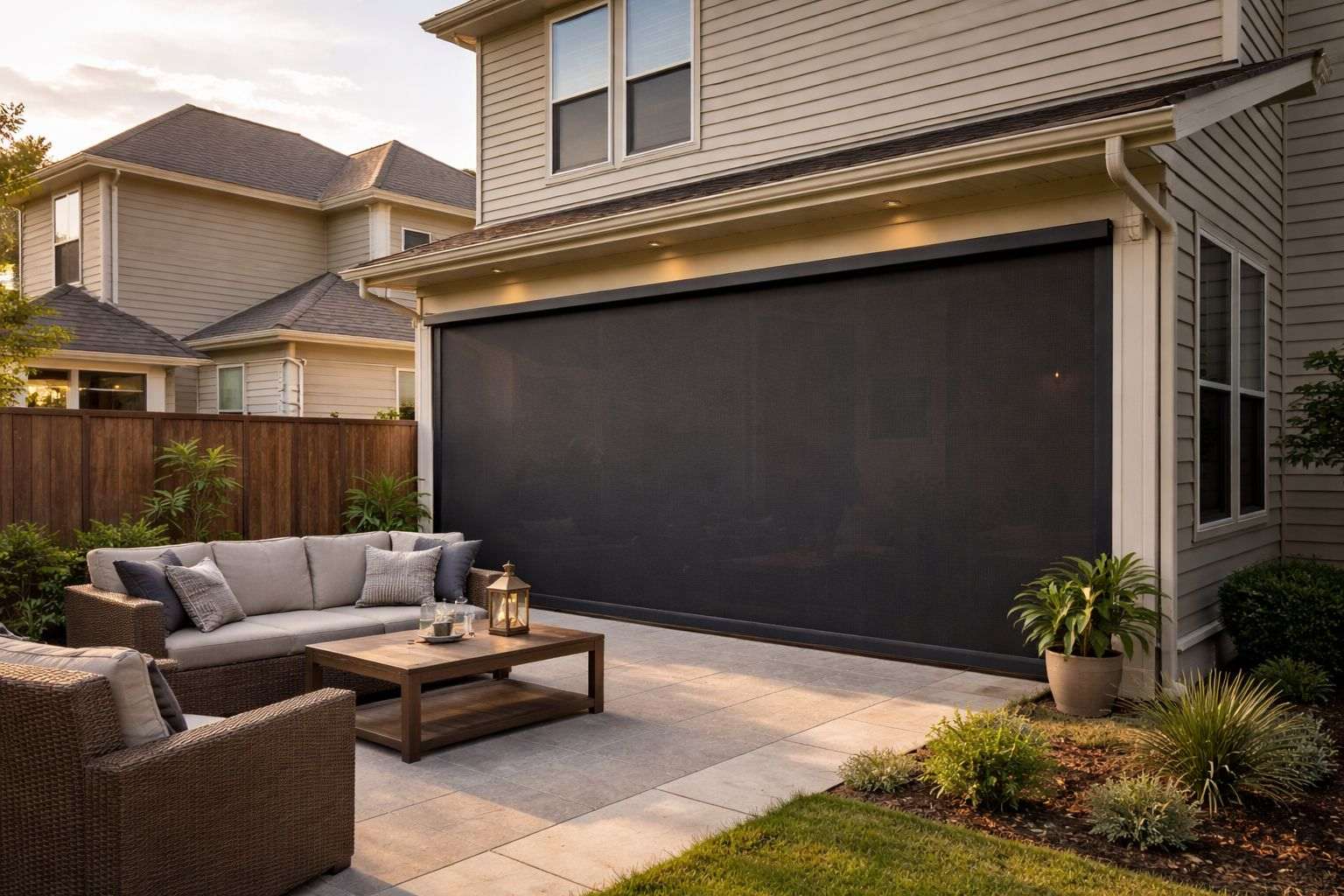
Does the screen have to seal the whole space?
Yes, and this is the part people miss. A screen only keeps insects out if every way in is closed.
- Every open side needs a screen. One screen on the neighbour side stops sightlines, not mosquitoes.
- The structure needs a roof. Under an open-rafter pergola, insects simply come in over the top.
- The sides and bottom matter. Our screens run in side channels and finish in a weighted bottom bar, which closes the edges far better than a loose curtain. An uneven floor can still leave a gap, so we check it at the site visit.
Where do insect screens work best?
The best candidates are spaces that already have a roof and defined openings: a covered porch, a gazebo, a roofed pergola, a covered patio off the back of the house, or a garage opening used as a workshop or summer room.
An open deck with nothing overhead is not a candidate on its own. It needs a roof structure first, or a different plan.
Why motorized screens suit this job
Insect screens get used at a predictable time: down at dusk, up in the morning. With Somfy motors, every screen on the structure can drop together from one button, a wall switch, or the app, so the space is closed before the mosquitoes arrive instead of after the first bite.
During the day the screens roll up into the housing and the porch or gazebo is fully open again. That is the difference from fixed screening, which stays in the view all season.
What to send us for a quote
- Photos of the structure showing every open side and the roof.
- Rough width and height of each opening.
- Whether the problem is bugs only, or also sun, wind, or neighbours.
- Whether there is power nearby for the motors.